The Hidden Hardware Tax: 6 Essential Accessories for a Professional Wheel Install
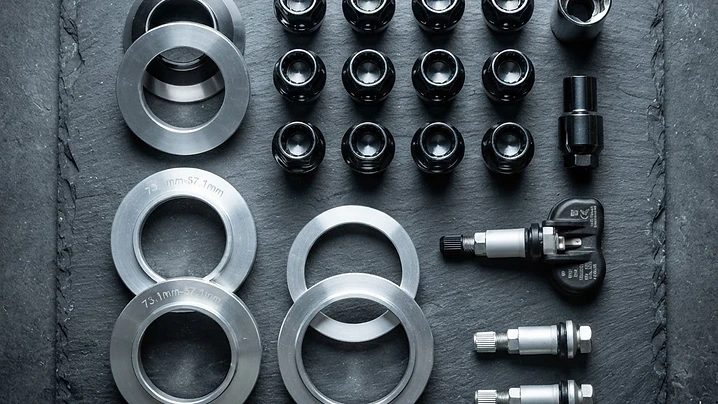
Buying wheels is only step one. Avoid project delays by budgeting for the specific fasteners, sensors, and spacers required to complete a safe and vibration-free installation.
Shop accessories
Browse all accessories
Beyond the Rims: Calculating the True Cost of Your Upgrade
Most enthusiasts spend weeks picking the perfect wheel design and offset, only to be blindsided by an extra $200–$400 in required hardware at the checkout. Buying aftermarket wheels is rarely a "bolt-on and go" affair using your factory equipment. To avoid having your car stuck on jack stands, you need to account for these six essential components during the ordering phase.
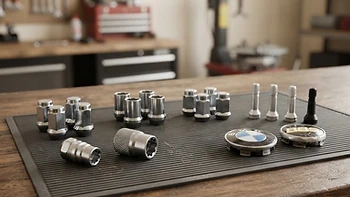
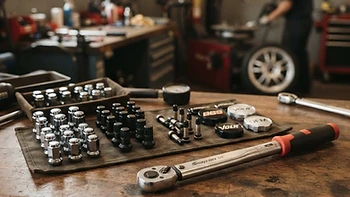
1. Aftermarket-Specific Lug Nuts or Bolts
Your factory lug nuts are almost certainly incompatible with aftermarket wheels. OEM fasteners typically use a large acorn or ball seat, while most aftermarket wheels require a 60-degree conical (tapered) seat with a smaller diameter to fit into narrower lug holes.
- Tip: Check if your new wheels require "spline drive" or "tuner style" lugs, which require a special thin-wall socket for installation.
2. Hub-Centric Rings
Aftermarket wheels are designed with large center bores to fit a wide range of vehicles. If your wheel's bore is 73.1mm and your car's hub is 56.1mm, the wheel is supported only by the lugs, leading to steering wheel vibration. Hub-centric rings fill this gap, centering the wheel perfectly on the hub.
3. New TPMS Sensors
While you can technically swap your old Tire Pressure Monitoring System (TPMS) sensors to new wheels, it is rarely advisable. TPMS batteries typically last 5–7 years. If your car is older, the labor cost to dismount a tire just to replace a dead sensor later will outweigh the cost of buying new pre-programmed sensors now.
4. High-Pressure Valve Stems
Don't let a $5 rubber part fail at 80 mph. If you aren't using TPMS-integrated valves, opt for metal bolt-in valve stems. They are more resistant to heat and centrifugal force, and they won't crack or leak over time like cheap pull-through rubber versions.
5. Wheel Spacers and Extended Studs
Sometimes the perfect wheel doesn't clear your brake calipers or hits the inner strut. Small "slip-on" spacers (3mm–5mm) can fix this, but they reduce the number of thread turns your lug nuts can grab.
- The Rule of Thumb: If a spacer reduces your thread engagement to less than 6.5–8 full turns, you must install extended wheel studs for safety.
6. Low-Profile Center Caps
If your car has protruding axle stubs (common on older RWD cars), standard center caps might not click into place. Verify the "cap clearance" height before buying to ensure the decorative center piece doesn't pop out the first time you drive.
Actionable Pre-Purchase Checklist
- Match the Seat: Verify if your wheels are Conical, Ball, or Flat seat.
- Measure the Bore: Identify your vehicle’s hub diameter (e.g., 64.1mm) and the wheel’s center bore.
- Sync the Sensors: Ensure new TPMS sensors operate on the correct frequency (315MHz vs. 433MHz) for your car's ECU.
- Check the Reach: Aim for a minimum of 10–12mm of thread engagement.
Find wheels for your car
Pick your make and model — we'll show you every wheel that fits your bolt pattern.
Get notified when new wheels are listed
New listings drop daily. Be the first to know when wheels for your car hit the marketplace. No spam, unsubscribe anytime.