Wheel Locks: Do They Actually Prevent Theft?

Wheel locks stop casual thieves but not determined ones. Here is an honest look at effectiveness, lock types, and the layers that actually work.
Wheel Locks: Do They Actually Prevent Theft?
Wheel locks (locking lug nuts) are one of the most common anti-theft accessories — but their real-world effectiveness depends entirely on the type and how they are used. Here is an honest assessment.
What Wheel Locks Are
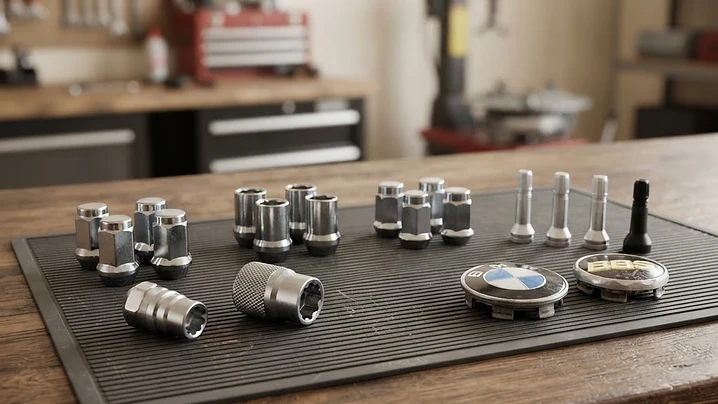
A wheel lock is a lug nut with a unique key pattern that requires a matching socket to remove. The idea: without the key, a thief cannot remove your wheels with standard tools.
How Effective Are They?
Against Opportunistic Theft
Wheel locks are highly effective against casual thieves. Most wheel theft is opportunistic — someone sees nice wheels and grabs them with a standard lug wrench and a jack. Wheel locks stop this cold. The thief does not have the key and moves on.
Against Determined Theft
A determined thief with the right tools defeats wheel locks in minutes. The tools:
- Locking lug remover sockets — a reverse-threaded socket that bites onto the lock and twists it off. $15 at any auto parts store.
- A nut splitter — a tool that cracks the lug nut open.
- An air chisel — hammered into the lock and twisted.
Wheel locks slow down a pro by 5-10 minutes per wheel. They do not stop a pro.
Types of Wheel Locks
Standard Keyed Locks
One lock per wheel, four different patterns. The key is a matching socket. The most common type — and the easiest to defeat with a remover socket.
spline Drive Locks
The entire lug nut is a spline pattern — not a hex. Requires a matching spline socket. Harder to defeat because the remover socket cannot grip the smooth exterior.
mcGard Gorilla Locks
Premium locks with proprietary patterns and hardened steel construction. More resistant to remover sockets. The best of the standard keyed locks.
Two Locks Per Wheel
Using two locks per wheel (opposite each other) doubles the work time — the thief has to defeat two locks, not one, per wheel. This is the most effective practical upgrade.
The Key Management Problem
The #1 reason wheels get stolen despite locks is lost keys. If the key is in the glovebox and the thief breaks into the car (common), they have the key. If the key is lost, you cannot get the wheels off either — and the tire shop cannot help without it.
Best Practice
Keep the key in the car but not obvious — under a seat, in the center console, in a tool roll. Do not leave it in the glovebox where it is the first thing found.
The Real Defense: Layers
Wheel locks are one layer. For real protection:
- Park in lit, visible areas. Most theft happens at night in unlit spots.
- Use two locks per wheel. Doubling the defeat time is the single biggest upgrade.
- Tilt the wheels. Turning the wheels to the curb makes jacking harder.
- Install an alarm. Motion sensors that trigger on jacking are a deterrent.
- Use a dashcam with motion detection. Footage catches the thief.
The Verdict
Wheel locks work against opportunistic thieves — which is most theft. They do not stop professionals. For the $30-50 cost, they are worth it. But they are not a substitute for parking smart and using multiple layers of security. Two locks per wheel is the upgrade that matters most.