Breakaway Torque Wrenches: Calibration and Use
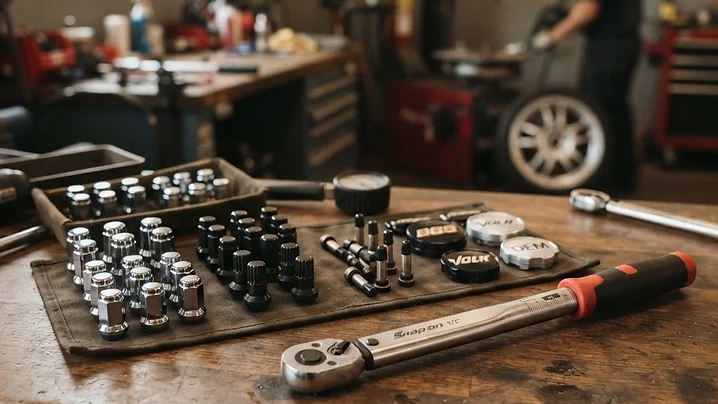
A torque wrench is only as accurate as its last calibration. Here is how to keep it accurate, how to use it correctly, and why storage matters.
Shop accessories
Browse all accessories
Breakaway Torque Wrenches: Calibration and Use
A torque wrench is only as accurate as its last calibration. An out-of-calibration wrench can over- or under-torque every lug nut on your car — and the only way to know is to get it checked. Here is what you need to know about calibration and proper use.
What Is a Breakaway (Click-Type) Torque Wrench?
A click-type torque wrench is the most common type for automotive use. It has an internal spring and ball detent mechanism calibrated to click (break away) at a set torque. When you hear or feel the click, you stop — the nut is at the set torque.
The click is the mechanism releasing — not a confirmation that you reached the right torque. If you keep turning after the click, you are over-torquing.
Calibration: Why It Drifts
Every torque wrench drifts over time. The internal spring fatigues from repeated use. The detent ball wears. Drops and impacts knock the calibration off. A wrench that was accurate when new may be 10% off after a year of use — and 10% on a 90 lb-ft spec is 9 lb-ft, enough to matter.
How Often to Calibrate
- Professional use (daily): Every 6 months or 5,000 cycles
- Enthusiast use (weekly): Annually
- After a drop: Immediately — drops can knock calibration off by 20%+
- After any impact: If the wrench was hit or dropped, do not trust it until checked
Where to Calibrate
Specialty tool shops and some auto parts stores offer torque wrench calibration. The wrench is tested against a master standard at multiple torque points and adjusted to spec. A calibration certificate is usually provided.
The cost is typically $15-30 — less than a single damaged wheel or stud.
Proper Use
Set the Torque
Turn the handle to the desired torque. For micrometer-adjustable wrenches, lock the setting after adjustment so it does not drift during use.
Pull Smoothly
Pull the wrench in one smooth, steady motion — do not jerk. Jerking applies peak loads above the set torque. The click should come as a gentle break, not a snap.
Stop at the Click
The moment you feel or hear the click, stop. Do not add another quarter turn — that is the most common way people over-torque.
Use the Full Range
Torque wrenches are most accurate in the middle 80% of their range. A 0-150 lb-ft wrench is most accurate at 40-120 lb-ft. At the very bottom (under 20 lb-ft) and top (near 150 lb-ft), accuracy is reduced.
Storage
The most common mistake: storing the wrench at a high torque setting. This compresses the internal spring and accelerates drift. Always back the torque setting to zero (or the lowest setting) before storing. This releases the spring and preserves calibration.
The Clicker vs Beam vs Digital
- Clicker (breakaway): Most common. Requires calibration.
- Beam: No calibration — the needle reads directly off the beam deflection. Less convenient but never drifts.
- Digital: Most accurate out of the box. Requires battery and has no drift — but the electronics can fail.
The Takeaway
A torque wrench in calibration is the only way to torque lug nuts correctly. Calibrate annually, store at zero, stop at the click, and replace if it has been dropped. The $25 calibration cost is the cheapest insurance against a loosened wheel or a sheared stud.
Find wheels for your car
Pick your make and model — we'll show you every wheel that fits your bolt pattern.
Get notified when new wheels are listed
New listings drop daily. Be the first to know when wheels for your car hit the marketplace. No spam, unsubscribe anytime.