Hubcentric Rings: Plastic vs Aluminum vs Polyurethane
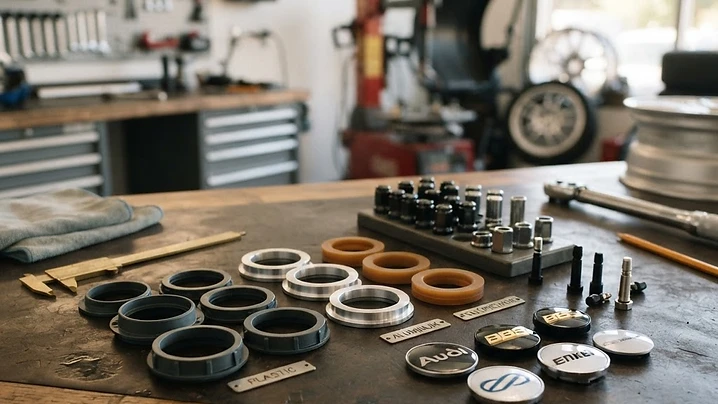
Hubcentric rings come in three materials with different tradeoffs. Here is how to choose between plastic, aluminum, and polyurethane — and why fit matters more than material.
Shop accessories
Browse all accessories
Hubcentric Rings: Plastic vs Aluminum vs Polyurethane
Hubcentric rings fill the gap between the wheel's center bore and the hub's pilot diameter. The material matters less than the fit — but each material has tradeoffs worth understanding.
What Hubcentric Rings Do
Aftermarket wheels are manufactured with a large, universal center bore (often 73mm or 72.6mm) so they fit many different cars. The hub centric ring adapts that oversized bore to your specific hub diameter (e.g., 56.1mm for Nissan, 64.1mm for Toyota).
The ring's inner diameter matches the hub pilot; the outer diameter matches the wheel bore. Once installed, the wheel centers precisely on the hub — the way it was designed to.
Plastic Rings
The most common and least expensive option. Quality varies widely.
Pros
- Inexpensive ($10-15 per set)
- Do not corrode
- Easy to install and remove
- Widely available
Cons
- Can crack if over-tightened or impacted
- Can melt if the hub gets extremely hot (brake overheating)
- May deform over time under continuous load
Best for: Daily drivers, street use, moderate conditions.
Aluminum Rings
The premium option — machined from billet aluminum.
Pros
- Extremely strong and durable
- Will not crack, melt, or deform
- Precise machining tolerances
- Long-lasting — can outlast the car
Cons
- More expensive ($25-40 per set)
- Can corrode to the hub if anti-seize is not used
- Harder to remove if corroded in place
Best for: Track use, heavy vehicles, extreme conditions, long-term installations.
Polyurethane Rings
A middle-ground option — more durable than plastic, less expensive than aluminum.
Pros
- Will not corrode
- More heat-resistant than plastic
- More impact-resistant than plastic
- Slightly compliant — absorbs minor vibrations
Cons
- Less precise than aluminum (slight dimensional variation)
- Can compress under sustained heavy load
- Less widely available than plastic
Best for: Performance street cars, vehicles in harsh weather, owners who want durability without aluminum's cost.
The Real Priority: Fit
The material matters less than the fit. A plastic ring that fits perfectly is better than an aluminum ring that is 0.1mm loose. The ring must match both the hub and the wheel bore exactly — no play, no forcing.
How to Verify Fit
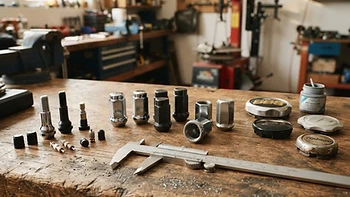
- Measure the hub pilot diameter with calipers.
- Measure the wheel bore with calipers.
- Order rings sized to those exact measurements.
- Test-fit: the ring should slide onto the hub snugly and the wheel should slide over the ring with no side-to-side play.
Installation Tips
- Clean the hub pilot of rust and debris before installing.
- Apply a thin film of anti-seize to prevent corrosion (especially with aluminum rings).
- The ring should seat flush against the hub face — not stand proud.
- If the ring falls off when the wheel is removed, it is worn out and should be replaced.
The Takeaway
Plastic for daily drivers, aluminum for track and heavy use, polyurethane for the middle ground. But the material is secondary to the fit — a perfectly-sized plastic ring outperforms a loose aluminum ring every time.
Find wheels for your car
Pick your make and model — we'll show you every wheel that fits your bolt pattern.
Get notified when new wheels are listed
New listings drop daily. Be the first to know when wheels for your car hit the marketplace. No spam, unsubscribe anytime.