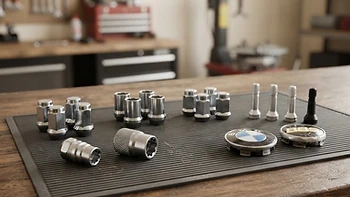
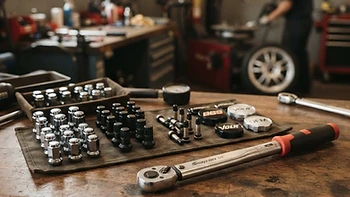
The Hardware Synergy Guide: Material Compatibility and Seat Geometry

A technical deep dive into how mismatched lug nut seats and incompatible metal alloys can lead to vibration, wheel damage, and seized hardware.
Shop accessories
Browse all accessories
The Geometry of Safety: Understanding Seat Types
When you buy aftermarket wheels, the most common mistake is assuming your factory lug nuts will physically fit the new mounting holes. Even if the thread pitch matches, the 'seat'—the area where the nut meets the wheel—must be identical. Using the wrong seat type prevents the nut from centering the wheel, leading to vibrations and potentially catastrophic stud failure.
- Conical (Tapered) Seat: The most common aftermarket style, usually featuring a 60-degree angle.
- Ball (Radius) Seat: Common on European makes like VW, Audi, and Mercedes. These use a rounded interface.
- Mag/Flat Seat: Found on many older Toyota and Lexus models, using a flat washer to distribute pressure.
Actionable Tip: Never use a ball-seat bolt on a conical-seat wheel. The contact patch will be a tiny sliver of metal rather than the full surface area, causing the bolt to loosen under load.
Material Science: Avoiding Galvanic Corrosion
Mixing different metals in a high-heat, high-moisture environment (like a wheel hub) creates a miniature battery. This process, known as galvanic corrosion, can cause your lug nuts or valve stems to 'weld' themselves to the wheel.
If you are running high-end forged aluminum wheels, be cautious with cheap chrome-plated steel accessories. Once the chrome plating chips, the exposed steel reacts with the aluminum. For winter driving or track use, consider black-oxide coated steel or titanium hardware. Titanium is chemically inert and won't react with aluminum, making it the gold standard for performance builds.
Valve Stems and TPMS: Beyond the Rubber Pull-Through
Modern Tire Pressure Monitoring Systems (TPMS) add a layer of complexity to your valve stems. When selecting accessories, you generally have two paths:
- Fixed Metal Stems: Often included with multi-piece wheels. These offer superior durability at high speeds but require specific TPMS sensors that can bolt directly to the stem.
- Rubber Snap-in Stems: Standard for most daily drivers. If you are upgrading to wheels with a deep lip, ensure the stem length provides enough clearance for an air chuck without hitting the wheel spokes.
The Hardware Refresh Checklist
Before you finalize your RimRevival cart, verify these technical points:
- Finish Match: Match your hardware finish to your wheel’s clear coat. Matte wheels look best with satin black hardware; polished wheels demand chrome or PVD finishes.
- Socket Clearance: Many aftermarket wheels have narrow 'tuner' holes. Ensure your lug nuts are 'Small Diameter' or 'Spline Drive' to avoid scratching the wheel finish with a standard 21mm socket.
- Spacer Hub-Centricity: If using spacers to achieve a flush look, ensure the spacer material matches the hub (typically steel or 6061-T6 aluminum) and includes a hub-centric lip to prevent steering wheel shimmy.
- Cap & Stem Clearance: Verify that center caps clear the axle stub and valve stems do not interfere with the wheel spokes or brake calipers.
Find wheels for your car
Pick your make and model — we'll show you every wheel that fits your bolt pattern.
Get notified when new wheels are listed
New listings drop daily. Be the first to know when wheels for your car hit the marketplace. No spam, unsubscribe anytime.