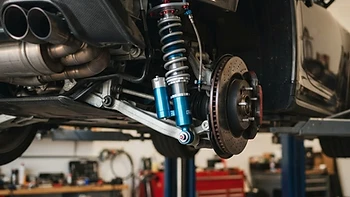
Damping Tuning: Reading Rebound and Compression on the Street
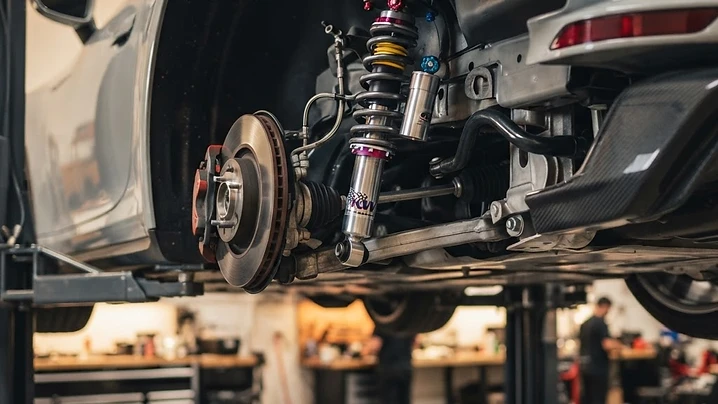
The damping knob changes how your car feels more than almost anything else — and most owners turn it the wrong way. Here's how to read rebound and compression on the street.
Shop suspension
Browse sport suspension parts
Shop this article
Browse sport suspension
Crown Automotive Wheel Spacer Set (2), 5 on 5.5"
$178.5

Wheel Spacers 5x112 12mm 66.6mm Hub Centric fits Mercedes
$4.5

Original Gorilla Lock Set - Acorn Bulge - 3/4" Hex - 1/2"-20 Thread Size - Chrome Finish - Set of 5 (71481NB5)
$45

McGard 27226 Chrome Bolt Style Cone Seat Wheel Lock Set (M14 x 1.25)
$44.99
Damping Tuning: Reading Rebound and Compression on the Street
The damping knob is the most powerful — and most misused — tuning tool on a coilover. It's a single dial that changes how the car feels more than almost anything else, and most owners turn it the wrong way because they don't understand the difference between rebound and compression.
The Two Halves of Damping
Every time the wheel hits a bump, two things happen: the spring compresses (the bump pushes up) and the spring extends back (the damper lets it back down). Damping controls both halves — and they need separate attention.
- Rebound damping controls how fast the spring extends back after compressing. Too much and the car won't recover between bumps — it packs down and gets harsh. Too little and the car bounces like a basketball.
- Compression damping controls how fast the spring compresses into a bump. Too much and the wheel can't follow the road — it skips and crashes. Too little and you bottom out on big hits.
The Single-Adjustable Trap
Most street coilovers are single-adjustable, and the knob controls rebound only (or a combined rebound/compression curve). That means you can fix a bouncy car, but you can't independently fix a harsh-on-bumps car — that needs compression adjustment, which you don't have.
This is why a single-adjustable on the soft setting often feels great: it's rebound-light and uses the spring to do most of the work. Cranking it stiff doesn't sharpen handling — it just makes the car pack down over bumps and lose grip.
Reading the Car
- Floaty, bouncy, slow to settle in transitions? Add rebound (stiffen the knob).
- Harsh over sharp bumps, skips mid-corner on rough pavement? Reduce compression — but if you can't, soften the whole curve (less rebound pulls less compression on a combined damper).
- Understeer on power, snaps into oversteer on lift? The front is too soft on rebound relative to the rear. Stiffen front rebound.
- Twitchy, nervous at speed? Too much rebound front, not enough rear. Soften front, stiffen rear.
The Method That Actually Works
- Start with the manufacturer's baseline — it's usually close.
- Drive a familiar road with bumps, sweepers, and a hard braking zone.
- Change one end, one click at a time. Drive the same road.
- Stop when it gets worse. The last setting before worse is your answer.
Damping tuning is incremental. The biggest mistake is making big changes — the second biggest is chasing a setup without a reference road to feel it on.
Find wheels for your car
Pick your make and model — we'll show you every wheel that fits your bolt pattern.
Get notified when new wheels are listed
New listings drop daily. Be the first to know when wheels for your car hit the marketplace. No spam, unsubscribe anytime.
Related listings
Browse sport suspensionCrown Automotive Wheel Spacer Set (2), 5 on 5.5"
$178.5
Wheel Spacers 5x112 12mm 66.6mm Hub Centric fits Mercedes
$4.5
Original Gorilla Lock Set - Acorn Bulge - 3/4" Hex - 1/2"-20 Thread Size - Chrome Finish - Set of 5 (71481NB5)
$45
McGard 27226 Chrome Bolt Style Cone Seat Wheel Lock Set (M14 x 1.25)
$44.99
Keep reading

Bump Stops and Travel Limits: What Happens When the Suspension Bottoms
7 min
How to Choose the Right Spring Rate for Your Build
5 min
Spring Rate, Wheel Rate, and Motion Ratio: The Number on the Spring Isn't the Whole Story
7 min