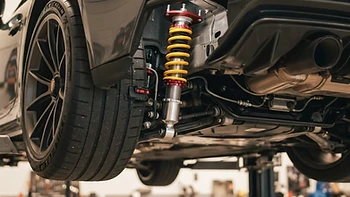
How to Choose the Right Spring Rate for Your Build
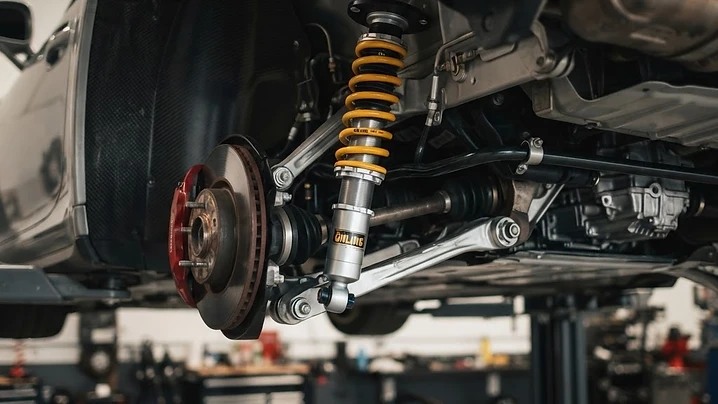
Spring rate is the single most important number in your suspension setup. Here's how to think about it without an engineering degree.
Shop suspension
Browse sport suspension parts
Shop this article
Browse sport suspension
Crown Automotive Wheel Spacer Set (2), 5 on 5.5"
$178.5

Wheel Spacers 5x112 12mm 66.6mm Hub Centric fits Mercedes
$4.5

Original Gorilla Lock Set - Acorn Bulge - 3/4" Hex - 1/2"-20 Thread Size - Chrome Finish - Set of 5 (71481NB5)
$45

McGard 27226 Chrome Bolt Style Cone Seat Wheel Lock Set (M14 x 1.25)
$44.99
How to Choose the Right Spring Rate for Your Build
Spring rate — measured in lbs/inch (or kg/mm) — is how much force it takes to compress the spring one inch. It's the foundation of your suspension, and getting it wrong turns a great parts list into a miserable car.
Soft vs Stiff
- Softer springs absorb bumps better, keep tires planted over rough pavement, and ride more comfortably. The trade-off: more body roll and slower transient response.
- Stiffer springs sharpen turn-in, reduce body roll, and hold a line better through corners. The trade-off: a harsher ride and a tire that skips over rough surfaces instead of gripping.
What Drives Your Rate
- Vehicle weight — Heavier cars need stiffer springs to resist the same amount of body roll.
- Tire choice — A sticky, low-profile performance tire can work with a stiffer spring; a tall, soft sidewall needs softer springing to stay compliant.
- Use case — Street favors the softer end of a chassis's range; track favors the stiffer end.
- Damper match — The damper must be able to control the spring. A spring that's too stiff for your damper will overshoot and bounce.
- Front/rear balance — It's not just one number. The front/rear split affects how the car rotates under load.
The Practical Rule
Start with the manufacturer's recommended rate for your chassis and weight. If you're adding coilovers, trust the matched spring that ships with them — it's valved for that rate. Only deviate when you understand why, and always re-align after a rate change.
The biggest mistake enthusiasts make is chasing the stiffest spring they can find. Stiffer isn't faster — matched is faster.
Find wheels for your car
Pick your make and model — we'll show you every wheel that fits your bolt pattern.
Get notified when new wheels are listed
New listings drop daily. Be the first to know when wheels for your car hit the marketplace. No spam, unsubscribe anytime.
Related listings
Browse sport suspensionCrown Automotive Wheel Spacer Set (2), 5 on 5.5"
$178.5
Wheel Spacers 5x112 12mm 66.6mm Hub Centric fits Mercedes
$4.5
Original Gorilla Lock Set - Acorn Bulge - 3/4" Hex - 1/2"-20 Thread Size - Chrome Finish - Set of 5 (71481NB5)
$45
McGard 27226 Chrome Bolt Style Cone Seat Wheel Lock Set (M14 x 1.25)
$44.99
Keep reading

Bump Stops and Travel Limits: What Happens When the Suspension Bottoms
7 min
Spring Rate, Wheel Rate, and Motion Ratio: The Number on the Spring Isn't the Whole Story
7 min
Damping Tuning: Reading Rebound and Compression on the Street
8 min