The Vibration Mystery: Why Hub-Centric Rings Are the Missing Link in Your Aftermarket Setup

Stop the steering wheel shake. Learn why matching your wheel's center bore to your vehicle's hub is the secret to a vibration-free ride.
The Hidden Gap in Your Wheel Fitment
You just installed a stunning set of aftermarket wheels, but as soon as you hit 60 mph, the steering wheel starts to shimmy. You’ve had the tires balanced twice, yet the vibration persists. The culprit isn't the balance; it’s likely a mismatch between your wheel’s center bore and your vehicle’s hub pilot.
Most aftermarket wheels are designed with a large center bore (often 73.1mm or 74.1mm) to ensure they can fit a wide variety of vehicles. However, your car’s hub is likely much smaller. This gap allows the wheel to sit slightly off-center during installation, leading to a "lug-centric" setup that causes high-speed vibrations [19][24].
Hub-Centric vs. Lug-Centric: The Real Difference
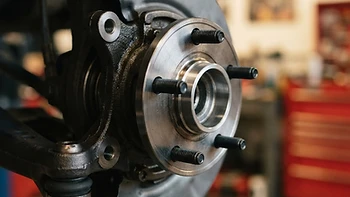
In a hub-centric design—the standard for all Original Equipment Manufacturer (OEM) setups—the wheel fits snugly against the hub. This contact point supports the weight of the vehicle and ensures the wheel is perfectly centered [6][9].
When you install aftermarket wheels without the proper hardware, you are often relying on the lug nuts to center the wheel. This is known as a lug-centric setup. While the tapered seats of the lug nuts attempt to center the wheel, the weight of the wheel can cause it to sag slightly before the lugs are fully torqued, resulting in a microscopic misalignment that feels like a massive vibration at speed [1][12].
The Solution: Hub-Centric Rings
Hub-centric rings are simple inserts that bridge the gap between the wheel's center bore and the vehicle's hub. To find the right size, you need two measurements [18]:
- Inner Diameter (ID): Matches your vehicle's hub diameter (e.g., 56.1mm for a Subaru).
- Outer Diameter (OD): Matches the center bore of your aftermarket wheels (e.g., 73.1mm).
Material Choice: Plastic vs. Aluminum
- Plastic (Polycarbonate): Corrosion-proof and affordable. Ideal for daily drivers in snowy climates where road salt is common [20].
- Aluminum: More durable and heat-resistant. Preferred for track use or high-performance driving, though they require anti-seize to prevent them from bonding to the hub [11][18].
Pro-Tips for a Perfect Installation
To ensure a vibration-free ride, follow these steps during your next wheel swap:
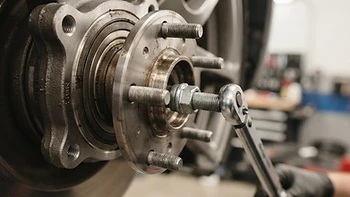
- Clean the Mating Surfaces: Use a wire brush to remove rust and debris from the hub face. A contaminated surface prevents the wheel from sitting flat [7].
- Apply Anti-Seize: If using aluminum rings, apply a thin coat of anti-seize to the hub. This prevents the ring from seizing to the car, which can make future wheel removals a nightmare [11].
- Seat the Ring in the Wheel First: Do not place the ring on the car hub first. Instead, press it into the back of the wheel's center bore. It should fit snugly with light finger pressure [11].
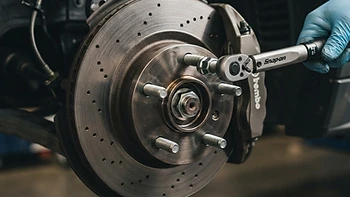
- Torque in Stages: Always use a star pattern and torque in at least two stages (e.g., 50% then 100% of final spec) to ensure the wheel seats evenly against the hub [7].
Find wheels for your car
Pick your make and model — we'll show you every wheel that fits your bolt pattern.
Get notified when new wheels are listed
New listings drop daily. Be the first to know when wheels for your car hit the marketplace. No spam, unsubscribe anytime.