Beyond the Bolt Pattern: The Critical Role of Hub-Centricity in Vintage Fitment
Matching your bolt pattern is only half the battle. Learn why the center bore is the secret to eliminating highway vibrations and ensuring a safe ride on vintage wheels.
Shop vintage
Browse vintage OEM wheels
The Vibration Mystery
You’ve spent weeks sourcing the perfect set of period-correct wheels. The bolt pattern matches your 1969 Nova perfectly, the backspacing clears the fenders, and the chrome is flawless. Yet, the moment you hit 60 mph, a persistent vibration rattles the steering wheel. If your wheels are balanced and your alignment is true, you are likely facing a hub-centricity mismatch.
Hub-Centric vs. Lug-Centric Explained
To achieve a vibration-free ride, a wheel must be perfectly centered on the axle. There are two ways the industry has historically achieved this:
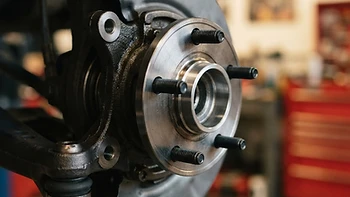
- Hub-Centric: The wheel’s center bore fits snugly over the hub’s center flange. The hub supports the vehicle's weight, while the lug nuts simply secure the wheel to the mounting surface. Most modern wheels are designed this way.
- Lug-Centric: The wheel is centered entirely by the lug nuts. The center bore is often significantly larger than the hub flange. Many vintage American muscle cars and trucks were designed as lug-centric systems from the factory.
The Vintage Aftermarket Conflict
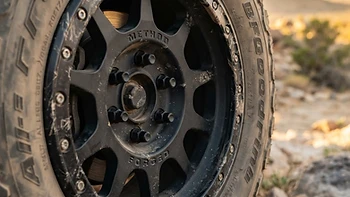
The problem arises when you mix eras. Most modern aftermarket wheels—even those with vintage styling like Rev Classics or US Mags—are manufactured with large center bores to fit a wide variety of vehicles. If you bolt a hub-centric wheel onto a vintage hub without a snug fit at the center, the wheel relies solely on the studs for centering. Even a fraction of a millimeter of offset can cause significant radial runout, leading to that dreaded highway shake.
How to Fix the Gap
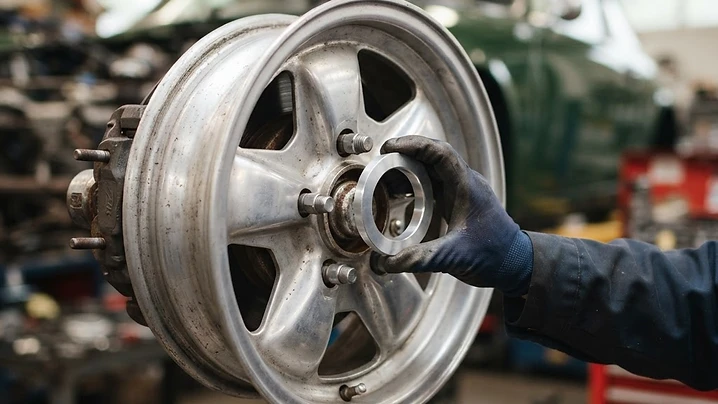
If your wheel’s center bore is larger than your car’s hub diameter, you need hub-centric rings. These are simple spacers made of polycarbonate or aluminum that fill the void between the hub and the wheel bore.
Step-by-Step Fitment Check:
- Measure the Hub: Use a digital caliper to find the outer diameter (OD) of your vehicle's hub flange.
- Measure the Wheel: Find the inner diameter (ID) of the wheel’s center bore. This is often stamped on the back of the wheel in millimeters (e.g., 73.1mm).
- Select the Ring: Purchase a ring set where the OD matches your wheel and the ID matches your hub.
- Verify Lug Seats: Ensure you are using the correct lug nut seat (conical, ball, or mag) to help the centering process. For lug-centric setups, a conical (tapered) seat is mandatory to help pull the wheel into alignment.
Pro Tip: Don't Force It
Never use an impact wrench to "draw" a wheel onto the hub if the center bore feels tight. Vintage hubs often have casting flash or rust buildup that can prevent a wheel from seating flush. Clean the hub flange with a wire brush and ensure the wheel slides on by hand before tightening your lugs in a star pattern to the manufacturer's torque specifications.
Find wheels for your car
Pick your make and model — we'll show you every wheel that fits your bolt pattern.
Get notified when new wheels are listed
New listings drop daily. Be the first to know when wheels for your car hit the marketplace. No spam, unsubscribe anytime.