The Seasonal Swap: A Tech’s Guide to Wheels, Fitment, and the 45-Degree Rule

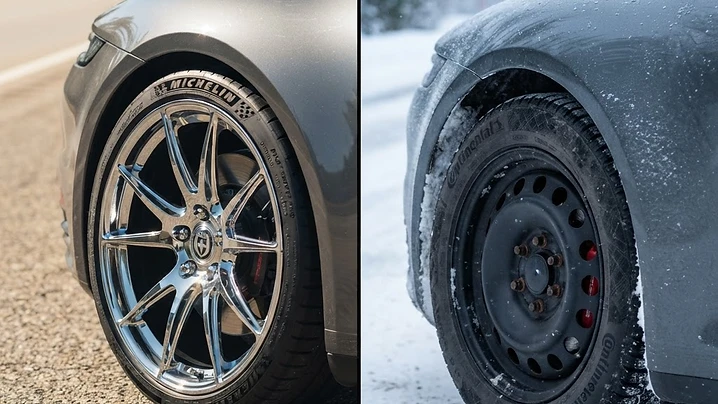
Master the science of seasonal wheel changeovers, from understanding the 1 PSI temperature rule to choosing the right bolt patterns for your winter set.
The Shop Tech’s Perspective on Seasonal Changeovers
Look, I see it every November: a customer rolls in with a low-tire-pressure light and a set of beautiful 20-inch aftermarket alloys caked in road salt. By the time April hits, those same rims are pitted and corroded. If you want to protect your investment and stay on the road, you need to stop thinking of wheels as a 'set and forget' component.
In the automotive world, seasonal changeover isn't just about traction; it’s about physics, metallurgy, and math. Whether you are running OEM (Original Equipment Manufacturer) wheels or upgrading to a wider aftermarket stance, the calendar dictates your maintenance schedule.
The 45-Degree Rule: When to Swap
The most common question I get is, "When is it time?" The industry standard, supported by organizations like Fountain Tire, is the 45°F (7°C) threshold.
- Spring to Summer: Once temperatures consistently stay above 45°F, summer compounds and high-performance alloys are back in play. Summer tires are designed for heat; running them in the cold makes the rubber brittle.
- Fall to Winter: When the mercury dips below 45°F, all-season and summer rubber begins to harden, losing grip. This is when you swap to your winter set.
Many drivers in regions like Quebec or the American Northeast now opt for a "two-set" strategy. According to market data from Autosphere, there is a growing trend of using attractive aftermarket rims for the summer and reverting to rugged, narrower OEM steel or alloy wheels for the winter to protect the vehicle's aesthetic value from salt damage.
Understanding Fitment and Bolt Patterns
If you’re buying a second set of wheels for the off-season, you can’t just eyeball it. Fitment is binary: it either fits perfectly, or it’s dangerous.
- Bolt Pattern: This is the number of lugs and the diameter of the circle they form (e.g., 5x114.3). As noted by Apex Wheels, you cannot force a 5x120 wheel onto a 5x114.3 hub. Even a 1mm difference can lead to sheared studs.
- Offset (ET): This determines how far the wheel sits in or out of the fender. A winter wheel often benefits from a slightly higher offset to keep the tire tucked away from slush spray.
- Center Bore: The hole in the middle of the wheel must match your hub exactly. If the wheel bore is larger than the hub, you need hub-centric rings to prevent high-speed vibrations.
The Physics of PSI: The 10-Degree Rule
Here is a concrete rule of thumb you can use tomorrow: Tire pressure changes by approximately 1 PSI for every 10°F change in ambient temperature.
This happens because air is a gas that expands when heated and contracts when cooled—a principle known as Gay-Lussac’s Law. According to Bridgestone, if you set your tires to 35 PSI on a 70°F afternoon, they could drop to 31 PSI on a 30°F morning without a single leak.
Seasonal Maintenance Figures
| Metric | Summer/Spring | Fall/Winter | | :--- | :--- | :--- | | Target Temperature | Above 45°F (7°C) | Below 45°F (7°C) | | PSI Adjustment | Check monthly; expect increases | Check weekly; expect drops | | Min. Tread Depth | 2/32" (Legal) / 4/32" (Rec) | 6/32" (Rec for snow) | | Wheel Material | Polished/Forged Alloy | Painted/Steel/OEM Alloy | | Torque Check | Every 50–100 miles post-swap | Every 50–100 miles post-swap |
Inspection and Storage
When you take a set off, don't just stack them in the corner of the garage.
- Clean Thoroughly: Brake dust is corrosive. Use a pH-neutral cleaner to remove all dust before storage.
- Inspect for Damage: Check for "curb rash" or bends. Winter potholes are notorious for damaging inner rims.
- Tread Depth: Use a gauge to check your 32nds. The NHTSA notes that while 2/32" is the legal limit, you’ll lose significant wet-weather clearing ability long before that.
- Storage Environment: Store wheels in a cool, dry, dark place. UV rays degrade tire compounds, and high humidity can corrode aluminum beads, leading to slow leaks next season.
What to do next
- Check your door jamb: Find your OEM cold inflation pressure and bolt pattern specs before shopping for a second set.
- Buy a torque wrench: When swapping sets, ensure you tighten lugs to your vehicle's specific spec (usually 80–100 lb-ft for cars). Never guess.
- Label your sets: Use chalk to mark "Front Left" (FL), "Rear Right" (RR), etc., so you can properly rotate them during the next changeover.
- Monitor the 45° mark: Set a weather alert for when local lows consistently hit 45°F to beat the rush at the tire shop.


