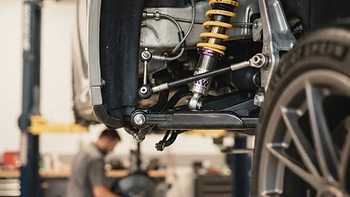
The Expiration Date You Can't See: Why Age Trumps Tread on Performance Rubber
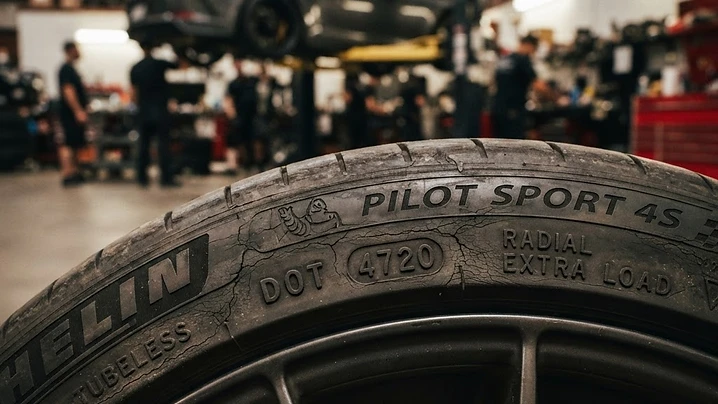
Don't let deep tread fool you. Learn how to decode DOT stamps and identify dry rot before your 'garage queen' or track build faces a catastrophic blowout.
Shop suspension
Browse sport suspension parts
Shop this article
Browse sport suspension
Crown Automotive Wheel Spacer Set (2), 5 on 5.5"
$178.5

Wheel Spacers 5x112 12mm 66.6mm Hub Centric fits Mercedes
$4.5

Original Gorilla Lock Set - Acorn Bulge - 3/4" Hex - 1/2"-20 Thread Size - Chrome Finish - Set of 5 (71481NB5)
$45

McGard 27226 Chrome Bolt Style Cone Seat Wheel Lock Set (M14 x 1.25)
$44.99
The 'Garage Queen' Trap
I see it every week in the shop: a pristine E46 M3 or a built 240SX rolls in on high-end coilovers and forged wheels. The owner is proud because the tires have 'plenty of meat left'—maybe 8/32" or 9/32" of tread. But when I look at the sidewall, I see the tell-tale spiderweb cracks of dry rot.
In the performance world, we obsess over spring rates and alignment specs, but we often ignore the only four patches of rubber touching the pavement. If your tires are old, it doesn't matter how expensive your suspension is; the chemical bond holding that rubber together is failing. With the average age of light vehicles in the U.S. hitting a record 12.8 years as of 2025, according to Matrix Consulting Group, more drivers than ever are riding on 'zombie' tires that should have been retired years ago.
Decoding the DOT Date Stamp
Every tire sold in the U.S. has a 'birthday' stamped into the sidewall, mandated by the National Highway Traffic Safety Administration (NHTSA). You’re looking for a string of characters starting with 'DOT.' The last four digits are the ones that matter.
- First two digits: The week of manufacture (01 through 52).
- Last two digits: The year of manufacture.
For example, a code ending in 1221 means the tire was produced in the 12th week of 2021. If you see a three-digit code, stop driving immediately. That tire was manufactured before the year 2000 and is a ticking time bomb, regardless of how it looks, according to Summit Racing.
Why Low Mileage Doesn't Save You
Tires are like sponges soaked in wax and oils called anti-ozonants. As you drive, the tire flexes, pushing these oils to the surface to protect the rubber from UV rays and oxygen. When a car sits in a garage or a driveway, those oils stay trapped inside. The rubber dries out, becomes brittle, and begins to 'rot.'
Data from Tyre Dispatch shows a clear correlation between chronological age and physical failure, even on tires that look 'new' to the untrained eye:
| Tire Age | Share Showing Cracking/Perishing | | :--- | :--- | | 0–3 Years | 6.7% | | 6–7 Years | 16.4% | | 8–9 Years | 30.4% | | 10–12 Years | 35.4% |
The risk of cracking nearly doubles once you cross the seven-year mark. This is why most manufacturers and the NTSB recommend a hard replacement limit of six to ten years, even if the tread depth is well above the legal 2/32" minimum.
The Rule of Thumb: The 1 PSI per 10°F Law
If you want to extend the life of your performance rubber, you must manage your pressures. A concrete rule of thumb is that tire pressure changes by approximately 1 PSI for every 10°F change in temperature.
Why does this matter for aging? Under-inflation is a leading cause of premature dry rot. When a tire is low on air, the sidewall flexes excessively, generating internal heat that breaks down the rubber compounds faster. If your car sits through a cold winter, you could easily lose 5–8 PSI, leading to accelerated sidewall degradation when you finally take it out for a spring cruise.
Performance Implications for Track and Street
For those running aggressive track setups or stiff coilovers, tire age is even more critical. Stiff suspension transfers more energy directly into the tire carcass. If that rubber has hardened due to age (a process called thermo-oxidative degradation), it won't 'bite' into the asphalt. You’ll experience a greasy feeling, increased understeer, and longer braking distances.
A fresh set of mid-range performance tires typically costs between $600 and $1,200 installed, according to Oards. Compared to the cost of a wrecked quarter panel or a blown strut from a delaminated tread, it’s the cheapest insurance you can buy.
What to do next
- Check your stamps: Locate the DOT code on all four tires (and the spare). If they are over 6 years old, plan for replacement; if they are over 10, don't drive on them.
- Inspect the 'valleys': Look closely at the base of the tread grooves and the sidewall near the rim. Any visible hairline cracks are a sign that the structural integrity is compromised.
- Adjust for the season: Use the 1 PSI per 10°F rule to adjust your pressures as the seasons change to prevent sidewall stress.
- Store smart: If your vehicle is a seasonal toy, keep it on jack stands or tire cradles to prevent flat-spotting, and keep the rubber away from electric motors (which produce ozone) and direct sunlight.
Find wheels for your car
Pick your make and model — we'll show you every wheel that fits your bolt pattern.
Get notified when new wheels are listed
New listings drop daily. Be the first to know when wheels for your car hit the marketplace. No spam, unsubscribe anytime.
Related listings
Browse sport suspensionCrown Automotive Wheel Spacer Set (2), 5 on 5.5"
$178.5
Wheel Spacers 5x112 12mm 66.6mm Hub Centric fits Mercedes
$4.5
Original Gorilla Lock Set - Acorn Bulge - 3/4" Hex - 1/2"-20 Thread Size - Chrome Finish - Set of 5 (71481NB5)
$45
McGard 27226 Chrome Bolt Style Cone Seat Wheel Lock Set (M14 x 1.25)
$44.99
Keep reading

Coilover Maintenance: Rebuilding, Resealing, and When to Replace
7 min
Bump Stops and Travel Limits: What Happens When the Suspension Bottoms
7 min
Damping Tuning: Reading Rebound and Compression on the Street
8 min