The Dynamic Clearance Checklist: Making Wide Wheels Work Under Load
Don't let your new wheels ruin your fenders. Learn how to account for suspension travel, motion ratios, and dynamic alignment to ensure a rub-free performance setup.
Shop suspension
Browse sport suspension parts
Shop this article
Browse sport suspension
Crown Automotive Wheel Spacer Set (2), 5 on 5.5"
$178.5

Wheel Spacers 5x112 12mm 66.6mm Hub Centric fits Mercedes
$4.5

Original Gorilla Lock Set - Acorn Bulge - 3/4" Hex - 1/2"-20 Thread Size - Chrome Finish - Set of 5 (71481NB5)
$45

McGard 27226 Chrome Bolt Style Cone Seat Wheel Lock Set (M14 x 1.25)
$44.99
Beyond the Static Fitment
Many enthusiasts make the mistake of measuring wheel fitment while the car is stationary on a flat shop floor. While a wheel might look perfectly flush in the driveway, the reality changes the moment you enter a high-G corner or hit a mid-corner bump. Dynamic fitment—how the wheel moves through the suspension’s arc—is what separates a functional track build from a car that shreds its sidewalls.
Understanding the Motion Ratio
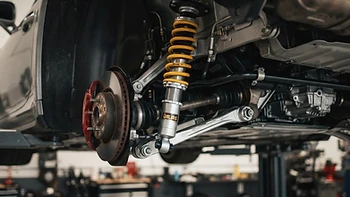
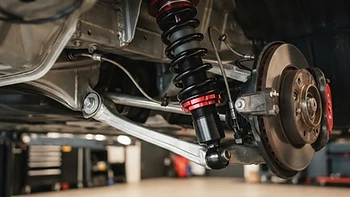
One of the most overlooked factors in wheel clearance is the motion ratio. As noted by SLRspeed, suspension travel does not translate directly to wheel movement. Because the coilover usually attaches to the control arm rather than the wheel hub itself, a 1-inch compression of the shock might result in significantly more vertical and lateral movement at the wheel.
If you are running a double-wishbone setup, the wheel often gains negative camber as it compresses. While this helps the top of the tire tuck under the fender, it also brings the inner lip closer to the coilover body or the inner wheel well. Conversely, MacPherson strut cars gain very little camber under compression, meaning the tire is more likely to slam directly into the fender lip if your offset is too aggressive.
The Dynamic Clearance Checklist
Before you commit to a new set of wheels or a lower ride height, run through these technical checks:
- Simulate Full Compression: Use a wheel fitment simulator tool or remove the springs from your coilovers to move the suspension through its full range of travel. This reveals exactly where the tire will contact the chassis at the limit of its stroke.
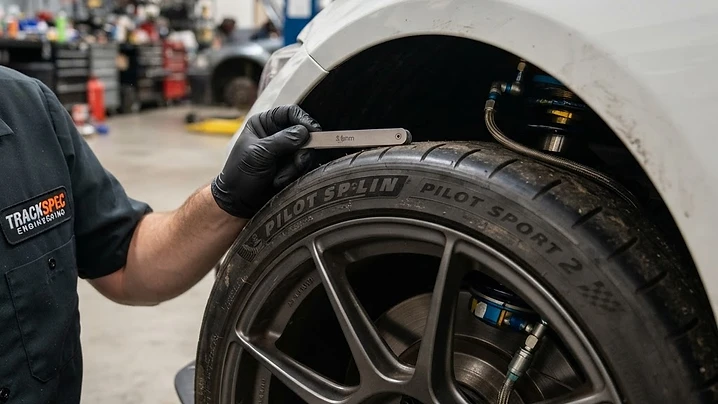
- Account for Tire Squirm: High-performance tires have flexible sidewalls. Under heavy lateral load, the tire can "roll" over the rim edge by several millimeters. If your clearance is paper-thin at a standstill, you will rub during hard cornering.
- Check Full Lock Clearance: Don't just check the fenders. Turn the steering wheel to full lock and check for contact against the frame rails, brake lines, and sway bars. Lowering a car changes the steering geometry, often bringing the tire closer to these internal components Tire Calculator Hub.
- Verify Bump Travel: Ensure your coilovers have enough "bump travel" (the distance the shock can compress from static height) before hitting the bump stops. If you are constantly bottoming out, you risk cracking your fenders or damaging the internal valving of the shock Gutentight Racing.
Engineering vs. Guesswork
Achieving the perfect stance requires more than just a low offset. It requires a balance of spring rate, damping, and alignment. If you find minor rubbing, consider increasing your spring rate to limit travel or using camber plates to tilt the tire away from the fender edge. When fitment stops being trial and error and becomes engineering, you gain the confidence to push your car to the limit without fear of mechanical failure.
Find wheels for your car
Pick your make and model — we'll show you every wheel that fits your bolt pattern.
Get notified when new wheels are listed
New listings drop daily. Be the first to know when wheels for your car hit the marketplace. No spam, unsubscribe anytime.
Related listings
Browse sport suspensionCrown Automotive Wheel Spacer Set (2), 5 on 5.5"
$178.5
Wheel Spacers 5x112 12mm 66.6mm Hub Centric fits Mercedes
$4.5
Original Gorilla Lock Set - Acorn Bulge - 3/4" Hex - 1/2"-20 Thread Size - Chrome Finish - Set of 5 (71481NB5)
$45
McGard 27226 Chrome Bolt Style Cone Seat Wheel Lock Set (M14 x 1.25)
$44.99
Keep reading

Coilovers 101: What to Know Before You Drop Your Ride
6 min
Lowering Springs vs Coilovers: Which Is Right for You?
5 min
Bump Stops and Travel Limits: What Happens When the Suspension Bottoms
7 min