The Air-Tight Truth: Why Tubeless Tires Changed Everything
From the shop floor to the highway, understanding the difference between tube-type and tubeless tires is critical for safety, repairability, and performance.
Shop tires
Browse all available tires
Shop this article
Browse all tires
The Foundation: Tube vs. Tubeless
In the shop, I see a lot of confusion about what actually holds the air in your tires. The difference is simple but fundamental: a tube-type tire relies on a separate rubber bladder (the inner tube) to contain pressure, while a tubeless tire uses an airtight inner liner—often made of halobutyl rubber—to seal directly against the rim.
Most modern passenger vehicles use tubeless tires because they are safer. If you pick up a nail in a tubeless tire, the rubber liner often clings to the object, allowing for a slow leak rather than an immediate blowout. In contrast, a tube-type tire will often deflate instantly because the tube cannot maintain its structural integrity once punctured.
The Repair Reality
There is a massive misconception that you can just plug any tire and keep driving. According to the U.S. Tire Manufacturers Association (USTMA) and Rubber Manufacturers Association (RMA) guidelines, a proper repair requires removing the tire from the rim to inspect the interior for hidden damage.
The "No-Go" Zones for Repair
| Condition | Action | | :--- | :--- | | Puncture > 1/4 inch (6mm) | Replace Tire | | Tread depth < 2/32 inch | Replace Tire | | Sidewall or shoulder damage | Replace Tire | | Overlapping previous repairs | Replace Tire |
If a shop tells you they can fix a puncture for $10 in five minutes, they are likely just shoving a plug in from the outside. This is dangerous. A professional repair requires a patch-plug combo: a stem to fill the injury and a patch to seal the inner liner.
The Physics of Pressure: A Rule of Thumb
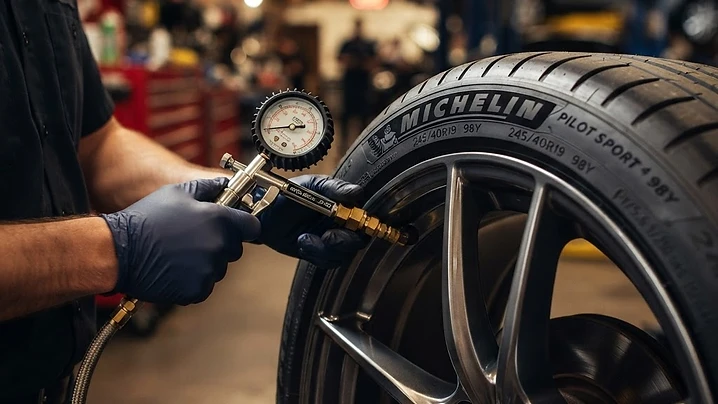
Regardless of your tire type, pressure is the most important variable for safety. NHTSA data shows that tire-related issues contribute to roughly 200,000 accidents annually. A critical rule of thumb for every driver: adjust your pressure by approximately 1 PSI for every 10°F change in ambient temperature.
Why? Air is a gas; it contracts in the cold and expands in the heat. If you set your tires to 35 PSI in a 70°F garage and then drive into 20°F weather, you could be running 5 PSI low. That under-inflation increases rolling resistance, generates excess heat, and accelerates tread wear.
Sizing and Age: The Fine Print
Always check your sidewall for the DOT date code. The last four digits tell you the week and year of manufacture (e.g., "2324" means the 23rd week of 2024). Even if you have plenty of tread left, rubber compounds degrade over time. Most manufacturers recommend replacement between 6 and 10 years, regardless of mileage.
When shopping, remember that tread depth is measured in 32nds of an inch. While 2/32" is the legal minimum, NHTSA research indicates that tire-related crash involvement jumps from 2.4% at full tread to 26% once tires are worn to that 2/32" limit. Don't wait for the wear bars to show; start shopping at 4/32".
What to do next
- Check your door placard: Never use the "Max PSI" listed on the tire sidewall. Use the PSI recommended on your vehicle's driver-side door jamb.
- Inspect your tread: Use a penny or a dedicated depth gauge to check for 4/32" remaining tread.
- Verify your DOT code: If your tires are older than 6 years, have a professional inspect them for dry rot or sidewall cracking.
- Demand a proper repair: If you get a flat, ensure the shop removes the tire to inspect the inner liner before patching.
Find wheels for your car
Pick your make and model — we'll show you every wheel that fits your bolt pattern.
Get notified when new wheels are listed
New listings drop daily. Be the first to know when wheels for your car hit the marketplace. No spam, unsubscribe anytime.