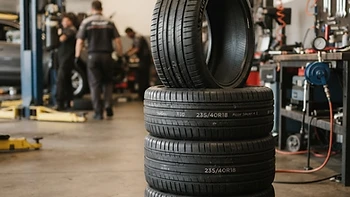
How to Read a DOT Tire Code (and Why a Tire's Age Matters)

Every tire sold in the US since 2000 carries a DOT code that tells you where and when it was made. Here's how to read it — and why a tire's age matters as much as its tread.
Shop tires
Browse all available tires
Shop this article
Browse all tires
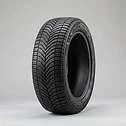
What is a DOT code?
If you look at the sidewall of any tire sold in the United States after the year 2000, you'll find a code that starts with the letters DOT. The part that matters most to a used-tire buyer is the last four digits — the date code — which tells you the week and year the tire was manufactured.
Reading the date code
The date code is four digits: the first two are the week (01–53) and the last two are the year. For example:
3522= the 35th week of 2022 (late August 2022)0119= the first week of 2019
A tire built in week 35 of 2022 is, as of mid-2026, approaching four years old. That's not automatically unsafe, but it's information you need.
Why age matters
Rubber degrades over time even when a tire isn't being driven. Heat, ozone, and sunlight dry out the compounds, leading to dry rot, cracking, and reduced grip. Most tire manufacturers and safety bodies recommend replacing tires that are 6 to 10 years old, regardless of how much tread is left. Some carmakers (and the rubber industry itself) cap usable life at 6 years for passenger tires.
So a used tire with 8/32" of tread sounds great — until you flip it over and find a date code from 2014. That's a tire near the end of its safe life, no matter how it looks.
What else the DOT code tells you
Before the date code, the DOT string identifies the plant where the tire was made and its size and construction. That's useful for matching a replacement to the exact original, but for most buyers the date code is the part worth memorizing.
What to check before you buy a used tire
- Find the DOT code on the sidewall (both sides may carry it; the full date code is on one side only).
- Decode the last four digits to get the manufacture week and year.
- Walk away from tires older than ~6 years unless you understand the risk.
- Look for cracking and dry rot along the sidewall and tread grooves — age shows.
RimRevival sellers are required to enter the DOT code and the decoded manufacture date on every tire listing, so you can verify the age before you ever message the seller.
Find wheels for your car
Pick your make and model — we'll show you every wheel that fits your bolt pattern.
Get notified when new wheels are listed
New listings drop daily. Be the first to know when wheels for your car hit the marketplace. No spam, unsubscribe anytime.