The Aftermarket Wheel Buyer’s Hub-Centric Checklist: Ensuring a Perfect Fit

Buying wheels isn't just about the bolt pattern. Use this checklist to ensure your new rims match your vehicle's hub for a vibration-free ride.
When shopping for aftermarket wheels on a marketplace like RimRevival, most enthusiasts focus on the bolt pattern and offset. However, the most common cause of post-installation headaches isn't the bolts—it is the center bore. While OEM wheels are designed to fit your vehicle's hub exactly, aftermarket wheels are often manufactured with oversized center bores to fit a wider variety of vehicles [4][12].
Use this checklist to ensure your new setup is safe, centered, and smooth.
1. Verify Your Vehicle’s Hub Diameter
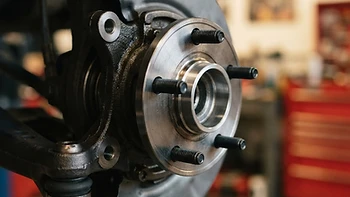
Before you click buy, you must know your vehicle’s hub pilot diameter. This is the small circular lip that protrudes from your brake rotor or drum. This measurement is usually expressed in millimeters (e.g., 56.1mm for many Subarus or 64.1mm for Hondas) [12][29]. You can find this in your owner’s manual or via a fitment database [16].
2. Check the Wheel’s Center Bore
Aftermarket wheels are typically "lug-centric" by design, meaning they have a large center bore (often 73.1mm or 72.56mm) to ensure they can fit over almost any hub [1][6]. If the wheel's center bore is larger than your vehicle's hub, you will have a gap. This gap prevents the wheel from being perfectly centered by the hub, forcing the lug nuts to do all the work—which often leads to high-speed vibrations [2][29].
3. Select the Right Hub-Centric Rings
If there is a gap, you need hub-centric rings (also called spigot rings). These act as a precision shim to fill the void [7][18].
- Plastic (Polycarbonate): Ideal for daily drivers. They don't corrode or "weld" themselves to the hub in winter conditions [12].
- Aluminum: Preferred for track use or high-heat environments, though they require a thin layer of anti-seize on the inner diameter to prevent galvanic corrosion [12][25].
4. Inspect the Mating Surfaces
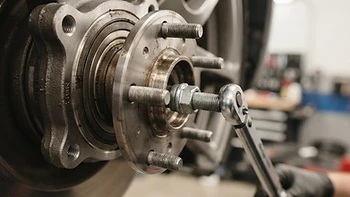
Before mounting, inspect the back of the wheel and the face of the hub. Any rust, scale, or leftover powder coating on these mating surfaces can prevent the wheel from sitting flush [21][26].
- Actionable Tip: Use a wire brush to clean the hub pilot and the wheel’s center bore until you see bare metal [22][24]. A clean surface ensures the hub-centric ring seats fully and the wheel doesn't "wobble" on a microscopic level.
5. The "Dry Fit" Test
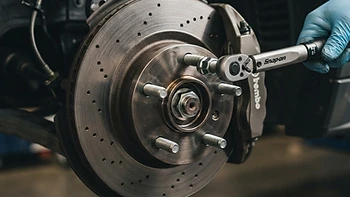
Before mounting tires, slide the bare wheel (with the hub ring installed) onto the vehicle's hub. It should slide on with minimal resistance but have zero play once seated. If the wheel can rock back and forth before you tighten the lugs, your hub ring is the wrong size [15][20].
Find wheels for your car
Pick your make and model — we'll show you every wheel that fits your bolt pattern.
Get notified when new wheels are listed
New listings drop daily. Be the first to know when wheels for your car hit the marketplace. No spam, unsubscribe anytime.