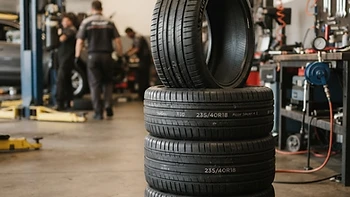
Load Index and Speed Rating: What Those Numbers Mean
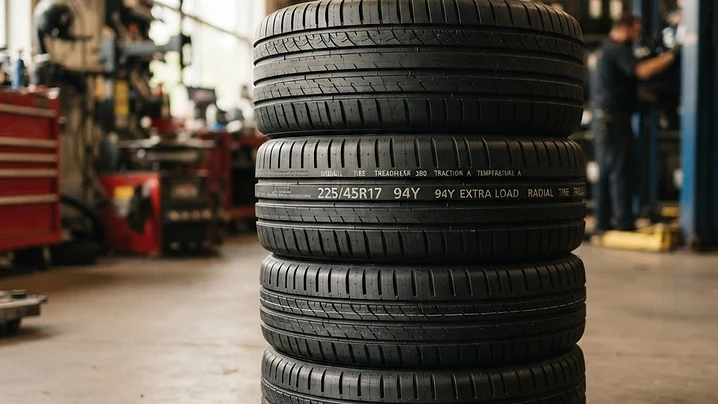
The 94H stamped on your tire is not decoration. Load index and speed rating determine what the tire was engineered to handle — and downgrading either is a safety risk.
Shop tires
Browse all available tires
Shop this article
Browse all tires
Load Index and Speed Rating: What Those Numbers Mean
Every tire sidewall has a service description — a string like 225/45R17 94H. The 94H part is the load index (94) and speed rating (H). These two numbers tell you exactly what the tire was engineered to handle, and ignoring them is a common and serious mistake.
Load Index
The load index is a number that corresponds to the maximum weight each tire can carry at its rated inflation pressure. A 94 means 1,477 lbs per tire. Four of them support 5,908 lbs total.
Common load indices:
- 91 = 1,356 lbs per tire (passenger car)
- 94 = 1,477 lbs per tire (mid-size sedan)
- 98 = 1,653 lbs per tire (full-size SUV)
- 104 = 1,984 lbs per tire (light truck)
Why It Matters
If you put a tire with too low a load index on your vehicle, the tire is overloaded even at correct pressure. It will overheat, wear rapidly, and can fail catastrophically. Always match or exceed the OEM load index.
Extra Load (XL) vs Standard Load
Some tires are marked XL (Extra Load) or Reinforced. These have a higher load index and stiffer sidewalls. They carry more weight but ride firmer. If your car specifies XL tires, do not substitute standard load — the tire will be under-rated for your vehicle.
Speed Rating
The speed rating is a letter indicating the maximum sustained speed the tire can handle without breaking apart from centrifugal force and heat buildup.
- H = 130 mph
- V = 149 mph
- W = 168 mph
- Y = 186 mph
- (Y) = 186+ mph
Why It Matters
A speed rating is not just about top speed — it reflects the tire's overall structural integrity. Higher-rated tires have stiffer construction that resists deformation under load. They feel more responsive and stable at highway speeds.
Downgrading the speed rating from OEM is dangerous and, in some jurisdictions, liability-exposing. If your car came with V-rated tires, do not install H-rated tires to save money.
How to Verify
Check your tire placard (usually on the driver's door jamb) for the OEM load index and speed rating. Match or exceed both when buying replacement tires. A tire with a higher load index and speed rating than required is always safe; a tire with lower ratings is not.
The Bottom Line
The load index and speed rating are not optional specs — they are the tire's safety certifications. Read them, understand them, and never downgrade.
Find wheels for your car
Pick your make and model — we'll show you every wheel that fits your bolt pattern.
Get notified when new wheels are listed
New listings drop daily. Be the first to know when wheels for your car hit the marketplace. No spam, unsubscribe anytime.