The Dangers of Running Different Tire Sizes on the Same Axle

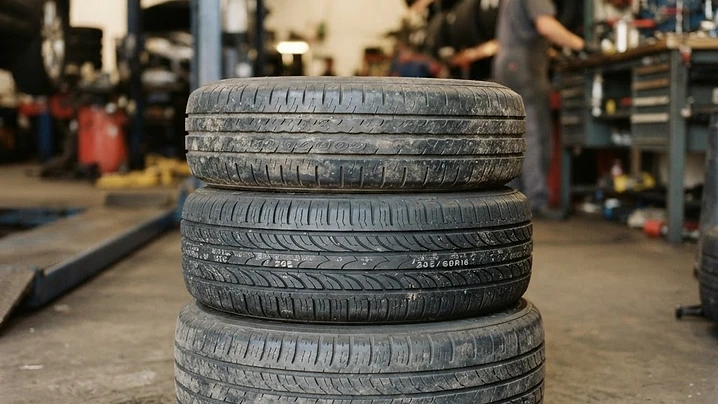
Mixing tire sizes on the same axle can damage the differential, trigger stability control, and cause unpredictable handling. Here is why it is never worth it.
The Dangers of Running Different Tire Sizes on the Same Axle
Mixing tire sizes on the same axle — different widths, diameters, or even brands with different circumferences — is one of the most dangerous things you can do. It affects handling, can damage the differential, and in some cars, can trigger electronic stability systems into shutting the car down.
The Core Problem: Different Circumferences
Tires of different sizes have different rolling circumferences. Even a small difference — say, one tire that is 1/2 inch larger in diameter — means the larger tire rotates fewer times per mile than the smaller one.
On a driven axle, the differential expects both wheels to rotate at the same speed (in a straight line). If one tire is larger, the differential thinks that wheel is constantly slipping — and it works continuously to compensate. On a long drive, this burns out the differential.
On AWD: Even Worse
All-wheel-drive systems distribute torque between all four wheels. If the tires have different circumferences, the system sees constant wheel speed differences and interprets them as slippage. The center differential or transfer case works continuously, overheats, and fails.
Most AWD manufacturers specify that all four tires must be within 2/32 of tread depth difference — and the same size and brand. Subaru, for example, can void the AWD warranty for running mismatched tires.
Handling Effects
Even on a non-driven axle (the front of a RWD car), different tire sizes affect handling:
- Braking: Uneven tire diameters cause uneven braking forces, potentially causing the car to pull to one side.
- Cornering: A wider tire on one side grips differently than a narrower tire on the other, creating unpredictable handling.
- Steering: Different sidewall heights change steering response from side to side.
The Most Common Mistake
Buying two new tires because two are worn out, and putting the new tires on one side and the old tires on the other. New tires have full tread; worn tires have less. The circumference difference is enough to affect the differential on driven axles and AWD systems.
The Right Way
If replacing two tires, put the new tires on the rear — regardless of whether the car is FWD, RWD, or AWD. New tires on the rear prevent oversteer (spinouts) in wet conditions. The older, worn tires go on the front, where understeer (pushing wide) is more controllable.
When You Must Replace All Four
On AWD vehicles, if the existing tires are more than 2/32 different in tread depth from new tires, you must replace all four — or have the new tires shaved down to match. This is not optional; it protects the drivetrain.
The Rule
Always run the same size, same brand, same tread depth on each axle — and on all four corners for AWD. Mixing tire sizes is not a cost-saving measure; it is a gamble with handling, braking, and drivetrain longevity.


