Instant Torque and Tire Wear: Why EVs Eat Tires Faster
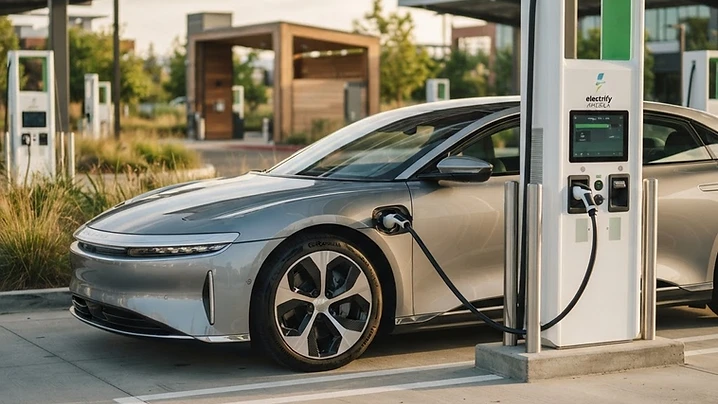
EVs wear tires 20-30% faster than equivalent ICE cars. The reasons are weight and instant torque — and understanding them explains why EV-specific tires matter.
Shop EV tires
Browse EV-rated tires
Instant Torque and Tire Wear: Why EVs Eat Tires Faster
EVs wear tires faster than equivalent ICE (internal combustion engine) cars — and it is not just because they are heavier. The instant torque of an electric motor is the other half of the equation, and it changes how tires wear in ways that surprise many new EV owners.
The Two Factors
1. Weight
EVs are heavy. A battery pack adds 500-1000 lbs to a vehicle compared to an equivalent ICE car. That weight goes directly through the tires — more weight means more friction, more heat, and faster wear. The contact patch is the same size, but the pressure on it is higher.
2. Torque Delivery
Electric motors deliver maximum torque at zero RPM. There is no waiting for the engine to reach its power band — the moment you press the accelerator, the motor is producing full torque. That torque goes through the tires immediately.
In an ICE car, the torque builds gradually with engine RPM. In an EV, it is instant. The tires take the full force from the first instant of acceleration.
How This Affects Wear
The Tread Shears
When torque is applied, the tire tread twists slightly — the top of the contact patch moves relative to the bottom as the tire grips the road. This is called tread shear. Higher torque means more shear, and more shear means faster tread wear.
EVs, with their instant torque, shear the tread more aggressively than ICE cars. A Model 3 can shear the tread in the first 10 feet of acceleration harder than a V8 Mustang does in its entire torque curve.
Front vs Rear Wear
On rear-wheel-drive EVs, the rear tires take all the acceleration torque — and wear faster than the front. On all-wheel-drive EVs, the torque is distributed, but the heavier end (usually the rear, where the motor is) wears faster.
Regen Braking
Regenerative braking uses the motor to slow the car — which means the tires handle deceleration torque as well as acceleration torque. The front tires, which handle most of the braking, take the brunt of this. On EVs, front tire wear is accelerated by regen braking.
The Numbers
Real-world data from EV owners shows tire life 20-30% shorter than equivalent ICE cars on the same model line. A tire that lasts 50,000 miles on an ICE car may last 35,000-40,000 miles on an EV variant.
Performance EVs (Model S Plaid, Taycan Turbo) can wear a set of tires in 15,000-20,000 miles — comparable to a high-performance sports car.
What EV-Specific Tires Do
Tire manufacturers have developed EV-specific compounds and constructions to address this:
Reinforced Carcass
EV tires have stiffer sidewalls and belt packages to handle the weight and torque. The stiffer carcass reduces tread shear by holding the tread more firmly.
Harder Compounds
EV tires use slightly harder tread compounds to resist the shearing forces. This trades dry grip for wear life — the same tradeoff as an ultra-high-performance all-season tire.
Reduced Rolling Resistance
EV tires are designed for low rolling resistance to maximize range. This means the tire deforms less as it rolls — which also means less heat and less wear.
What EV Owners Should Do
Rotate Frequently
Rotate tires every 5,000-7,500 miles — more often than the 7,500-10,000 mile interval for ICE cars. The frequent rotation evens out the wear between front and rear, which is more uneven on EVs.
Check Alignment
EVs are sensitive to alignment — the extra torque amplifies any alignment issue. A small toe misalignment that would be barely noticeable on an ICE car will chew through a tire on an EV.
Choose the Right Tires
If your EV has EV-specific tires (OEM), replace them with the same model. Swapping to a non-EV tire may save $50 per tire but halve the tread life.
Drive Smoothly
The single biggest factor in EV tire wear is driving style. Smooth, gradual acceleration and regenerative braking extend tire life dramatically. Aggressive acceleration wears the tires — and the range — in equal measure.
The Takeaway
EVs eat tires faster because they are heavier and deliver instant torque. The weight is inherent to the platform; the torque is inherent to the motor. Neither can be changed — but tire choice, rotation frequency, alignment, and driving style can all extend the life of the tires. An EV tire is not a marketing gimmick — it is a tire designed for the forces an EV applies.
Find wheels for your car
Pick your make and model — we'll show you every wheel that fits your bolt pattern.
Get notified when new wheels are listed
New listings drop daily. Be the first to know when wheels for your car hit the marketplace. No spam, unsubscribe anytime.