EV-Specific Tire Compounds: What Makes Them Different
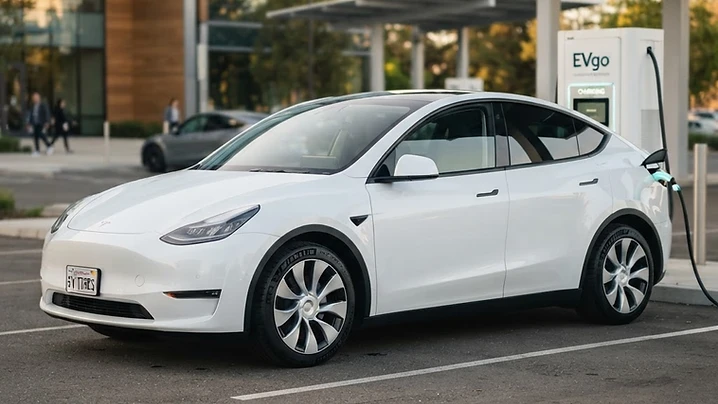
EV tires look like regular tires but are engineered for weight, torque, and rolling resistance. Here is what the compound, construction, and design priorities are.
Shop EV tires
Browse EV-rated tires
EV-Specific Tire Compounds: What Makes Them Different
EV-specific tires look like regular tires but are engineered differently. The compound, the construction, and the design priorities are all tuned for the unique demands of an electric vehicle. Here is what makes them different.
The Three Demands
An EV tire must handle:
- More weight — the battery adds 500-1000 lbs.
- More torque — instant, full torque from zero RPM.
- Lower rolling resistance — to maximize range.
These three demands pull in different directions. A tire that handles weight and torque needs to be stiff — but stiffness increases rolling resistance, which decreases range. An EV tire is the engineered compromise.
The Compound
Harder Rubber
EV tires typically use a slightly harder tread compound than the equivalent ICE tire. The harder compound resists the tread shearing from instant torque, extending tread life. The tradeoff is slightly less dry grip — but on an EV, the extra weight provides the traction that the compound gives up.
Lower Hysteresis
Rolling resistance comes from the tire deforming as it rolls — the tread compresses as it contacts the road and springs back as it leaves. This deformation generates heat, which is energy lost from the battery. EV compounds are formulated for low hysteresis — the rubber springs back with less energy loss, reducing heat and rolling resistance.
Silica-Heavy
EV compounds use high levels of silica (silicon dioxide) in the tread. Silica improves wet grip without increasing rolling resistance — it lets the tire grip in wet conditions while still deforming efficiently. Traditional carbon black compounds trade wet grip for rolling resistance; silica compounds do not have to.
The Construction
Stiffer Sidewalls
EV tires have stiffer sidewalls than equivalent ICE tires. The stiffer sidewall:
- Handles the extra weight without excessive flex.
- Reduces tread shear from instant torque by holding the tread more firmly.
- Improves steering response — the extra weight of an EV can make steering feel sluggish, and the stiffer sidewall counters this.
Reinforced Belt Package
The belt package (the steel belts under the tread) is reinforced to handle the weight and torque. More belt material means more weight — but the tire holds its shape under load, which reduces tread wear and maintains the contact patch.
Lightweight Carcass
To offset the weight of the reinforced belt package, EV tire carcasses use lighter materials in non-critical areas. The result is a tire that is stiffer where it needs to be and lighter where it can be.
The Design Priorities
A conventional tire is designed with these priorities:
- Grip (dry and wet)
- Ride comfort
- Tread life
- Rolling resistance
An EV tire reorders these:
- Rolling resistance (for range)
- Tread life (for weight and torque)
- Grip (wet, for safety)
- Ride comfort (EVs are already quiet; tire noise is more noticeable)
This reordering means that an EV tire is not necessarily the best tire for an ICE car — it prioritizes range over dry grip, and the harder compound may feel less responsive on a lighter vehicle.
The Noise Factor
EVs are quieter than ICE cars — there is no engine noise to mask tire noise. Tire noise is more noticeable in an EV, so EV tires are designed with noise reduction:
Foam Inserts
Many EV tires have foam strips bonded to the inside of the tread. The foam absorbs the sound waves that the tread generates as it rolls, reducing cabin noise by 1-3 dB. This is a feature that originated in luxury car tires and has migrated to EV-specific models.
Tread Pattern
EV tire tread patterns are designed to minimize air pumping — the sound of air being squeezed out of the tread blocks as the tire rolls. The pattern uses more closed shoulders and fewer grooves, reducing the pumping noise.
How to Identify an EV Tire
Tire manufacturers label EV-specific tires in various ways:
- Michelin — the EV version of a tire may carry an EV suffix (e.g., Pilot Sport EV).
- Bridgestone — the EV tire may be labeled with an ECO or EV designation.
- Continental — EV-specific tires may carry an e-Designation.
- Goodyear — the EV version may be branded as Efficient Grip or Eagle EV.
If your EV came with EV-specific tires, the safest replacement is the same model. Swapping to a non-EV tire may save money upfront but cost it in tread life and range.
The Takeaway
EV-specific tires are not a marketing label — they are engineered for the weight, torque, and rolling-resistance demands of an EV. The compound is harder and lower-hysteresis, the construction is stiffer and lighter, and the design prioritizes range and tread life over dry grip. On an EV, an EV tire is the right choice — and on an ICE car, a conventional tire still is.
Find wheels for your car
Pick your make and model — we'll show you every wheel that fits your bolt pattern.
Get notified when new wheels are listed
New listings drop daily. Be the first to know when wheels for your car hit the marketplace. No spam, unsubscribe anytime.