Beyond the Bubble: The Tech's Guide to Wheel Balancing, Stick-On Weights, and Road Force
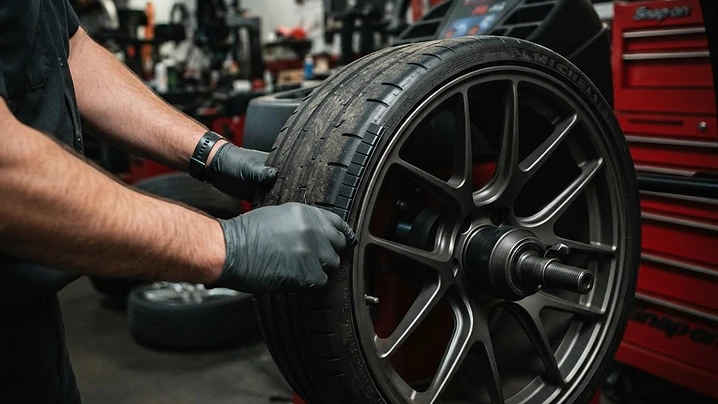
Tire vibration at 60 mph isn't always bad rubber. Here is how static vs. dynamic balancing, clip-on vs. adhesive weights, and road-force match-mounting actually cure ride-quality gremlins.
Shop tires
Browse all available tires
Shop this article
Browse all tires
Every tire tech knows the drill: a customer walks in complaining that their steering wheel shakes violently between 55 and 70 mph, right after paying $800 for fresh rubber. They usually blame a defective tire or a bad alignment. But alignment sets vehicle trajectory and tire wear angles; it almost never causes a high-speed rhythmic shake. Nine times out of ten, the culprit is rotational balance, weight hardware failure, or radial runout.
According to the Rubber Manufacturers Association (RMA / USTMA), modern passenger tires require meticulous mass distribution to survive highway speeds. When an assembly spins at 65 mph, an average passenger tire rotates roughly 800 to 850 times per minute. At that velocity, centrifugal force multiplies tiny manufacturing variances into hammering impacts against your suspension.
The Rule of Thumb: The 0.25-Ounce Highway Threshold
Here is the immediate rule of thumb every driver should remember: an imbalance as tiny as 0.25 ounces (approx. 7 grams) is enough to trigger a noticeable seat or steering wheel vibration at highway speeds.
Why? Centrifugal force scales with the square of vehicle speed ($F = m \cdot \omega^2 \cdot r$). That 0.25-ounce heavy spot might feel unnoticeable when crawling through city traffic at 25 mph. But once you hit 65 to 70 mph, that 7-gram imperfection exerts several pounds of intermittent vertical and lateral force against the wheel hub on every rotation. Over a 5,000-mile span, that sustained hammering beats down tie rods, wheel bearings, and suspension struts while cupping your tread blocks unevenly.
Static vs. Dynamic Balancing: One Plane vs. Two
When a wheel spins, it moves across more than just an up-and-down axis.
- Static Balancing (Single-Plane): Corrects vertical bounce (known in the shop as wheel tramp). Imagine spinning a bicycle wheel by hand; the heavy spot simply rolls to the bottom. In a static balance, weights are placed on a single center plane to offset the vertical hop. While adequate for narrow trailer wheels or skinny motorcycle rims, static balancing cannot manage the lateral forces generated by today's wider passenger tires.
- Dynamic Balancing (Dual-Plane): Corrects both vertical hop and side-to-side wobble (wheel shimmy). When a wide 245mm or 285mm tire spins, an uneven spot on the inside bead creates a twisting couple relative to the outside bead. Dynamic balancers use dual-plane sensors to measure forces at both the inner and outer rim lips, prompting the technician to split weights between inner and outer planes to stop wobble.
Clip-On vs. Adhesive Weights: Fitment and Corrosion Risks
Correct balancing is useless if the weight detaches on the interstate. Today's shops use two distinct mounting formats:
- Clip-On Weights: Traditional lead or zinc/steel weights hammered directly onto the wheel's rim flange. They provide high mechanical retention, making them ideal for heavy steel utility wheels and OEM designs with generous lips. However, using a standard clip-on on modern alloy rims is a recipe for disaster: the clip can crack the clear coat, allowing road brine to induce galvanic corrosion. Furthermore, lip flanges shallower than 3/16 inch cannot safely seat standard clip profiles.
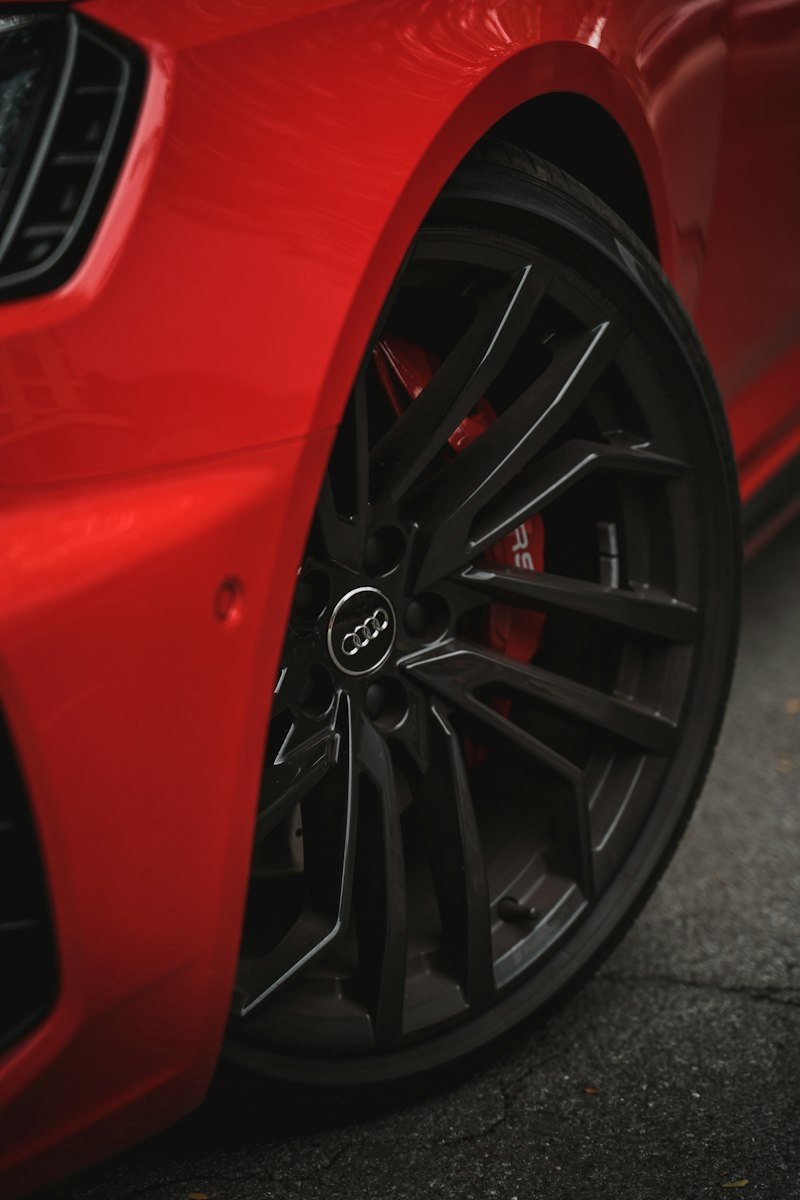
- Adhesive (Stick-On / Tape) Weights: Flat, tape-backed zinc or steel segments placed in the barrel of the wheel, hidden behind the spokes. They protect expensive custom forged and powder-coated alloy wheels from mechanical scratching and curb scuffs. The catch? Surface prep is critical. If a technician does not thoroughly scrub brake dust and grease with isopropyl alcohol before pressing the automotive-grade tape down, the weight will sling off under highway heat and rotational load. Technicians must also verify at least 1/8-inch of clearance between the adhesive strip and large front brake calipers.
| Balancing Approach | Primary Plane Corrected | Best Application | Hardware Used | | :--- | :--- | :--- | :--- | | Static | Vertical hop (Single-plane) | Spares, trailers, narrow steel rims | Single lip clip-on or centerline adhesive | | Dynamic | Vertical hop + Lateral shimmy | Modern cars, wide crossovers, highway daily drivers | Split dual-plane (flange clip / barrel adhesive) | | Road-Force | Radial runout + Tire stiffness variations | Low-profile performance tires, persistent shake | Match-mounted placement + dynamic weights |
Road-Force Balancing: When Traditional Weights Aren't Enough
Sometimes an assembly reads "0.00 / 0.00" on a computerized dynamic spin balancer, yet the driver still feels a harsh vibration. That is where road-force balancing (commonly performed on Hunter Road Force diagnostic balancers) comes in.
A tire is not a rigid piece of plastic; it is an assembly of rubber compounds, belts, and chords that acts like a circular bundle of springs. If one section of the tire sidewall is stiffer than the rest, it hits the pavement harder with every rotation, even if the wheel is perfectly balanced by weight.
Road-force equipment applies a loaded roller—typically exerting 1,000 to 1,400 pounds of force—against the rotating tire to simulate the vehicle's real weight on the pavement. It measures radial force variation (stiffness) and geometric runout (out-of-roundness). If the high spot on a tire meets the high spot on an alloy rim, the machine instructs the tech to perform match mounting: breaking the beads, rotating the tire 180 degrees on the rim, and aligning the stiffest spot of the tire with the lowest spot on the wheel. This cancels out runout before applying minimal balancing weights.
What to Do Next
- Diagnose by touch: A vibration felt mostly through the steering wheel rim typically points to front-wheel dynamic imbalance, while a rhythmic shake felt through the seat cushion or floorboard points to rear wheel issues.
- Inspect your rim weights: Take a flashlight and inspect the inner barrel of your wheels. If you notice a rectangular adhesive residue patch missing its metal segment, you shed a wheel weight and need a rebalance.
- Request dynamic balancing as baseline: Ensure your shop defaults to a dual-plane dynamic balance rather than a static single-plane spin.
- Opt for road-force on low-profile rubber: If you are running 40-series or lower tires, or 19-inch-plus alloy rims, invest the extra $15–$30 per wheel for road-force match-mounting to protect your ride quality from day one.
Find wheels for your car
Pick your make and model — we'll show you every wheel that fits your bolt pattern.
Get notified when new wheels are listed
New listings drop daily. Be the first to know when wheels for your car hit the marketplace. No spam, unsubscribe anytime.