The Thermal Penalty: How Summer Heat Distorts Wheel Pressures, Suspension Geometry, and Grip

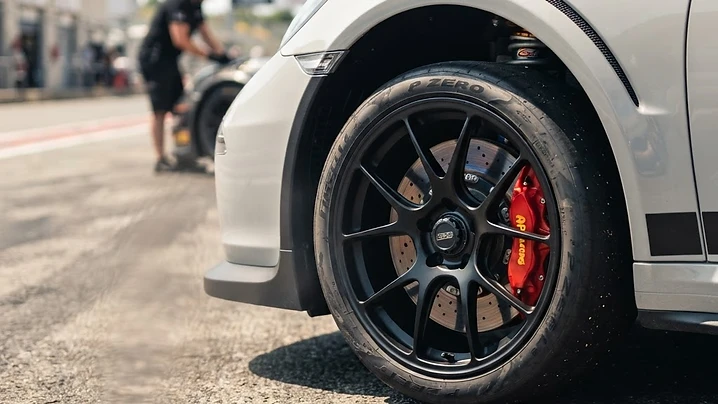
When asphalt hits 150°F, low-profile performance setups undergo severe pressure creep, damper fade, and accelerated tread shear. Here is how to keep your chassis dialed.
On an ordinary July afternoon, you pull out of your driveway with a cold tire pressure reading of 32 PSI. Ambient air sits at a muggy 95°F, but down on dark asphalt, solar radiation routinely pushes pavement temperatures to 140°F or even 150°F. By the time you string together twenty minutes of spirited backroad driving or a single 15-minute HPDE track stint, your pressure gauge reads 39 PSI.
That 7-PSI swing is not a fluke. It is Gay-Lussac’s Law playing out inside your wheel assembly, and it directly alters the spring rate, camber contact patch, and damper dynamics of your car.
The Direct Physics: Why Pressure Creeps in Summer
Every driver running performance rubber needs to understand the fundamental relationship between temperature and pressure: tire pressure changes approximately 1 PSI for every 10°F change in air temperature.
This rule of thumb works because gas molecules in a closed volume increase their kinetic energy as thermal energy transfers inward. They move faster, collide harder with the inner carcass, and elevate internal pressure. When you factor in the friction of 200-treadwear compounds against gritty pavement plus radiant heat from hot brake rotors, internal tire temps easily jump 60°F to 80°F above morning ambient levels. Testing documented by Chicken Hawk Racing demonstrates that a 75°F bump in tire carcass temperature produces roughly a 6 PSI spike.
| Cold Base Setting | Pavement / Operating Temp | Thermal Rise | Hot Working Pressure | Handling Consequence | | :--- | :--- | :--- | :--- | :--- | | 30 PSI (70°F garage) | 100°F (Easy highway) | +30°F | ~33 PSI | Normal highway compliance | | 32 PSI (80°F morning) | 140°F (Hot street commute) | +60°F | ~38 PSI | Crowned contact patch, harsh ride | | 32 PSI (95°F ambient) | 170°F+ (Track / Autocross) | +75°F+ | 39–41 PSI | Massive loss of adhesive grip, center wear |
The Contact Patch: Crown Wear and Tread Shedding
An inflated tire functions as an undamped pneumatic spring. When you gain 6 to 8 PSI purely from summer pavement transfer, the effective spring rate stiffens dramatically.
Instead of the load spreading evenly across the tire's shoulder and center bands, the tire crowns. As noted by tire monitoring engineers at Intercomp, an overheated center strip indicates high operating pressures that shrink the usable contact patch and reduce lateral adhesive grip.
If you are running an aggressive negative camber setup (e.g., -2.5° to -3.2° on track coilovers), excessive heat accelerates rubber degradation. High-performance summer compounds shed tread rapidly once they exceed their optimal thermal window. An overheated tire drops its durometer hardness by 15% to 20%, transforming crisp, communicative turn-in into a greasy, unpredictable slide.
Coilovers and Bushings Under Thermal Load
Drivers often blame tires for mid-summer handling slop, but the undercar hardware suffers just as much:
- Damper Fade: Monotube and twin-tube coilovers rely on specialized hydraulic fluid. When ambient temperatures hover in the triple digits and heat transfers from the wheel hub, damper fluid thins out, decreasing shock viscosity. High-speed rebound softens, causing the chassis to feel floaty or oscillate over road undulations.
- Polyurethane and Spherical Joints: While rubber bushings dry out and crack over repeated heat cycles, aftermarket polyurethane bushings can soften and deform under severe localized exhaust and brake heat. Unsealed spherical rod ends (pillow-ball top mounts) dry out faster as synthetic lubricants thin and migrate, attracting abrasive brake dust.
Failure Risk: Under-Inflation Kills Faster Than Over-Inflation
Many drivers notice hot pressures climbing and instinctively bleed out massive amounts of air while the tire is scorching. That is dangerous. According to data from the National Highway Traffic Safety Administration (NHTSA), under-inflation is the leading cause of tire failure.
When a tire is under-inflated relative to vehicle load, the sidewall flexes violently with every revolution. This mechanical flexing creates rapid internal heat generation. Combine that dynamic friction with 145°F blacktop, and the carcass cords separate, leading to sudden highway delamination.
What to Do Next
- Check Pressures Exclusively Cold: Always take your baseline reading in the shade before the car has moved more than one mile, preferably in the morning.
- Target Working Pressures, Not Static Ones: If your setup handles best at 34 PSI hot on track or during canyon runs, bleed air down gradually between sessions as the carcass warms, but re-inflate back to OEM spec once the car rests overnight.
- Inspect Coilovers for Weepage: Wipe down coilover shock bodies. Thinning summer oil will reveal failing shaft seals before complete hydraulic blowout occurs.
- Check Bushings and Ball Joints: Inspect suspension boots and polyurethane bushings for heat cracking or grease evacuation.


