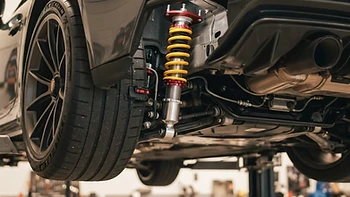
The Seasonal Shakeout: Protecting Your Performance Setup from Potholes and Pressure Drops
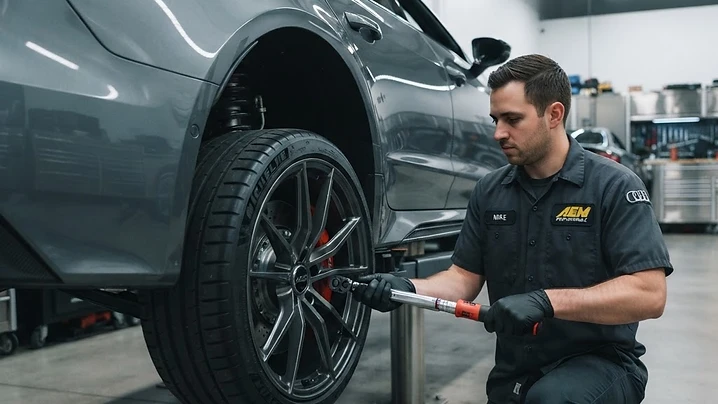
A high-performance suspension is only as good as its maintenance. Learn how to protect your coilovers and forged wheels from seasonal hazards with a professional-grade inspection routine.
Shop suspension
Browse sport suspension parts
Shop this article
Browse sport suspension
Crown Automotive Wheel Spacer Set (2), 5 on 5.5"
$178.5

Wheel Spacers 5x112 12mm 66.6mm Hub Centric fits Mercedes
$4.5

Original Gorilla Lock Set - Acorn Bulge - 3/4" Hex - 1/2"-20 Thread Size - Chrome Finish - Set of 5 (71481NB5)
$45

McGard 27226 Chrome Bolt Style Cone Seat Wheel Lock Set (M14 x 1.25)
$44.99
The Reality of Performance Maintenance
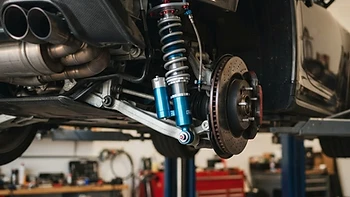
You didn’t spend $3,000 on a set of adjustable coilovers and forged monoblock wheels just to let a neglected $0.50 pothole or a 10-degree temperature swing ruin your handling. When you lower a car or stiffen the damping, you’re reducing the margin for error. A stock SUV might soak up a frost heave, but in a performance build, that energy is transferred directly into your rims, bushings, and strut towers.
As a tech, I see the same story every April: a customer comes in with a vibration they can’t shake, only to find a hairline crack in a $900 wheel or a blown shock seal. According to Christian Brothers Automotive, suspension damage from road hazards can easily rack up bills of $1,000 or more. To keep your setup crisp, you need a dedicated spring and fall inspection routine.
The 1 PSI Rule: Why Temperature Dictates Grip
The most immediate seasonal change you’ll face is air density. Here is a concrete rule of thumb every driver should memorize: Tire pressure changes by approximately 1 PSI for every 10°F change in ambient temperature.
This happens because air is a gas that expands when heated and contracts when cooled. In the fall, as the mercury drops from 70°F to 30°F, you could lose 4 PSI without a single puncture. For a standard commuter, that’s a fuel economy hit; for a track-prepped car on 200-treadwear tires, that’s a dangerous loss of sidewall stiffness and a change in the contact patch. JACO Superior Products notes that the NHTSA reports nearly 11,000 tire-related crashes annually—many of which stem from improper inflation. Always check your pressures "cold" (before driving) to get an accurate baseline.
Spring: The Pothole Post-Mortem
Spring is the most dangerous season for performance wheels. As ice melts and water seeps into pavement cracks, it expands, creating the "pothole season" that plagues the Midwest and Northeast. If you’ve lowered your car, your suspension travel is limited, meaning your wheels take the brunt of these impacts.
The Sidewall Bubble Check
When you hit a sharp edge, the tire can get "pinched" between the rim and the road. This often causes an internal tear in the carcass, leading to a sidewall bulge or bubble. If you see a bubble, the tire is a ticking time bomb; the structural integrity is gone, and a blowout is imminent.
The "Spin Test" for Bent Rims
Alloy wheels, particularly larger 19-inch or 20-inch fitments with low-profile tires, are highly susceptible to bending. Even if a wheel holds air, a slight bend on the inner barrel will cause high-speed vibrations. During your spring swap, have a tech spin the wheels on a balancer. MOTOR Magazine suggests listening for "crunchy" sounds from wheel bearings and watching for "wobble" that indicates a structural breakdown.
Fall: Prepping for the Long Chill
Before the car goes into storage or faces the winter grind, you need to verify your hardware hasn't vibrated loose over a summer of spirited driving.
Torque Re-Checks
Heat cycles from heavy braking and cornering can cause lug nuts and suspension fasteners to settle. While most street cars have a torque spec between 80 and 100 lb-ft, you should always consult your specific vehicle torque specs. Use a calibrated torque wrench—never an impact gun—to ensure even clamping force across the rotor face, which prevents warping.
Tread Depth and Safety Thresholds
While the legal limit in many states is 2/32", performance enthusiasts should look at 4/32" as the real-world retirement age for tires. Data analyzed by the Transportation Research Board shows that stopping distances increase exponentially as you drop below the 4/32" mark, especially in wet conditions.
| Tread Depth | Condition | Action Required | | :--- | :--- | :--- | | 8/32" - 10/32" | New/Excellent | Baseline performance | | 6/32" | Good | Monitor for uneven wear | | 4/32" | Caution | Reduced hydroplaning resistance; consider replacement | | 2/32" | Dangerous | Legal minimum; immediate replacement required |
What to do next
- Buy a high-quality digital pressure gauge: Don't rely on the gas station pump; they are notoriously inaccurate. Check your PSI every two weeks during seasonal transitions.
- Perform a "Visual 360": Once a month, turn your wheels to full lock and inspect the inner sidewalls for bubbles, tears, or rubbing marks against the coilover bodies.
- Schedule an alignment check: If you hit a significant pothole, your "toe" or "camber" settings likely shifted. Even a 0.5-degree variance can scrub off $500 worth of rubber in a single season.
- Clean your threads: When swapping wheels, use a wire brush to clean the wheel studs. Debris in the threads can lead to false torque readings, meaning your wheel isn't as tight as the wrench says it is.
Find wheels for your car
Pick your make and model — we'll show you every wheel that fits your bolt pattern.
Get notified when new wheels are listed
New listings drop daily. Be the first to know when wheels for your car hit the marketplace. No spam, unsubscribe anytime.
Related listings
Browse sport suspensionCrown Automotive Wheel Spacer Set (2), 5 on 5.5"
$178.5
Wheel Spacers 5x112 12mm 66.6mm Hub Centric fits Mercedes
$4.5
Original Gorilla Lock Set - Acorn Bulge - 3/4" Hex - 1/2"-20 Thread Size - Chrome Finish - Set of 5 (71481NB5)
$45
McGard 27226 Chrome Bolt Style Cone Seat Wheel Lock Set (M14 x 1.25)
$44.99
Keep reading

Spring Rate, Wheel Rate, and Motion Ratio: The Number on the Spring Isn't the Whole Story
7 min
Sway Bars and Chassis Bracing: Tightening Up the Handling
5 min
Coilovers 101: What to Know Before You Drop Your Ride
6 min