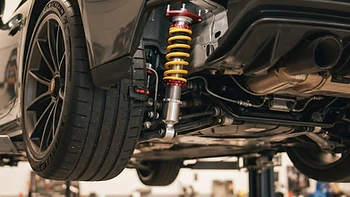
The Scrub Radius Trap: Why Your New Wheel Offset Might Be Ruining Your Steering

Achieving the perfect flush fitment often comes at the cost of steering feel and stability. Understand how wheel offset alters your scrub radius and how to maintain performance while upgrading your stance.
Shop suspension
Browse sport suspension parts
Shop this article
Browse sport suspension
Crown Automotive Wheel Spacer Set (2), 5 on 5.5"
$178.5

Wheel Spacers 5x112 12mm 66.6mm Hub Centric fits Mercedes
$4.5

Original Gorilla Lock Set - Acorn Bulge - 3/4" Hex - 1/2"-20 Thread Size - Chrome Finish - Set of 5 (71481NB5)
$45

McGard 27226 Chrome Bolt Style Cone Seat Wheel Lock Set (M14 x 1.25)
$44.99
The Hidden Cost of Stance
When enthusiasts shop for performance wheels, the focus is usually on two things: aesthetics and brake clearance. We look for the most aggressive offset to push the wheels out to the fender edge, creating that sought-after "flush" look. However, changing your wheel offset does more than just alter the car's stance; it fundamentally shifts the suspension geometry. The most critical, yet often ignored, consequence of this change is the alteration of the scrub radius.
What is Scrub Radius?
Scrub radius is the distance between two theoretical points on the ground: the center of the tire’s contact patch and the point where the steering axis (the line through your upper and lower ball joints or strut mount) intersects the road [1].
- Positive Scrub Radius: The steering axis hits the ground inboard of the tire's centerline. Most rear-wheel-drive cars use this to provide better steering feedback [2].
- Negative Scrub Radius: The steering axis hits the ground outboard of the tire's centerline. This is common in front-wheel-drive cars to help stabilize the car during diagonal braking failures [12].
- Zero Scrub Radius: The axis and the contact patch center meet perfectly. While this sounds ideal, it can lead to a "squirmy" feel because the tire lacks a clear pivot point.
How Offset Changes the Equation
When you install wheels with a lower (more negative) offset than factory, you move the center of the tire further away from the car. This increases the scrub radius [3]. If your car was designed with a small positive scrub radius and you add 20mm of outward poke, you have significantly increased the leverage the tire has over the steering rack.
This change manifests in several ways. First, you will experience increased kickback through the steering wheel when hitting bumps. Second, the car may become "darty," following ruts in the road (tramlining) more aggressively. Finally, changing the offset acts as a lever on your suspension; a wheel pushed further out exerts more force on the spring and damper, effectively softening your spring rate and potentially causing the suspension to bottom out more easily [9].
Actionable Tips for a Better Setup
To maintain handling performance while upgrading your wheels and suspension, follow these guidelines:
- Use an Offset Calculator: Before buying, use a wheel offset calculator to see exactly how much your new setup will move the inner and outer rim edges compared to stock [16].
- Compensate with Alignment: If you have increased your scrub radius significantly, adding a small amount of extra toe-in can help stabilize the car and reduce wandering on the highway.
- Check Bearing Loads: Extreme negative offsets increase the leverage on your wheel bearings, leading to premature wear [10]. If you are going wide, ensure your bearings are in top condition or consider heavy-duty replacements.
- Prioritize Scrub over Poke: If you are building a track car, prioritize keeping the scrub radius as close to the factory design as possible. This ensures the steering remains predictable at the limit of grip [12].
Find wheels for your car
Pick your make and model — we'll show you every wheel that fits your bolt pattern.
Get notified when new wheels are listed
New listings drop daily. Be the first to know when wheels for your car hit the marketplace. No spam, unsubscribe anytime.
Related listings
Browse sport suspensionCrown Automotive Wheel Spacer Set (2), 5 on 5.5"
$178.5
Wheel Spacers 5x112 12mm 66.6mm Hub Centric fits Mercedes
$4.5
Original Gorilla Lock Set - Acorn Bulge - 3/4" Hex - 1/2"-20 Thread Size - Chrome Finish - Set of 5 (71481NB5)
$45
McGard 27226 Chrome Bolt Style Cone Seat Wheel Lock Set (M14 x 1.25)
$44.99
Keep reading

Sway Bars and Chassis Bracing: Tightening Up the Handling
5 min
Spring Rate, Wheel Rate, and Motion Ratio: The Number on the Spring Isn't the Whole Story
7 min
Coilovers 101: What to Know Before You Drop Your Ride
6 min