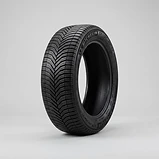
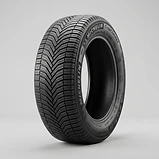
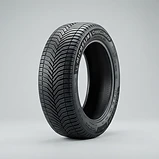
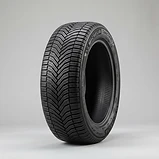
The Run-Flat Reality: Engineering, Tradeoffs, and the 'No-Repair' Rule
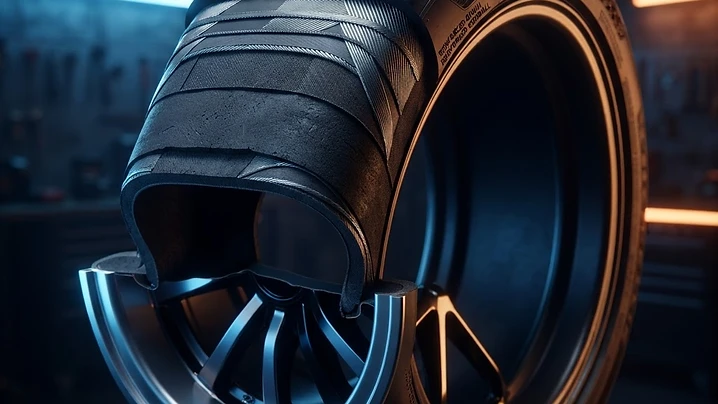
Understand the reinforced sidewall technology keeping you off the shoulder, and why that convenience comes with specific replacement rules and ride quality costs.
Shop tires
Browse all available tires
Shop this article
Browse all tires
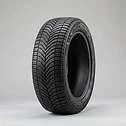
The Reinforced Sidewall: How Run-Flats Keep You Rolling
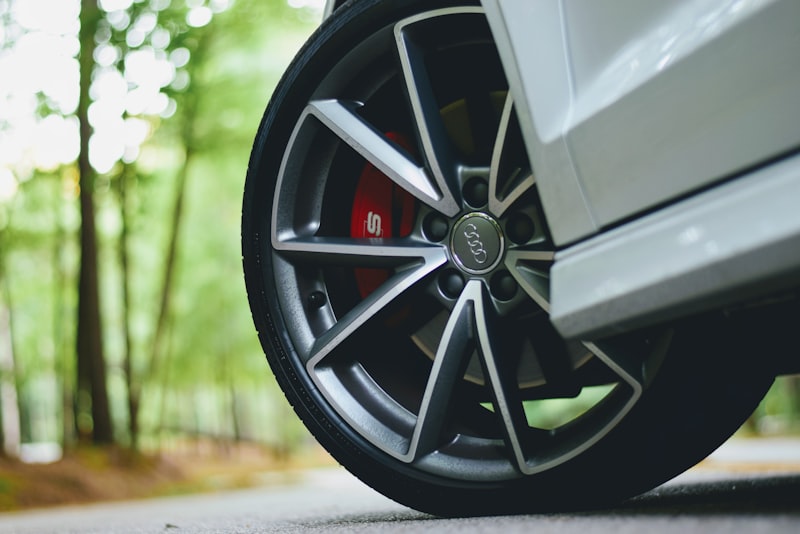
If you drive a modern BMW, Mercedes-Benz, or Mini, you likely noticed something missing from your trunk: a spare tire. Instead, your vehicle is equipped with Run-Flat Tires (RFT). Unlike a standard tire that relies entirely on pressurized air to hold its shape, a run-flat uses reinforced sidewalls containing tough rubber inserts. According to Bridgestone, these inserts carry the vehicle's weight even when internal pressure drops to zero.
This isn't just a convenience feature; it is a safety design. A standard tire at highway speeds can experience a 'blowout' where the sidewall collapses and the rim hits the pavement, often leading to a loss of control. A run-flat maintains its structure, allowing you to steer and brake predictably. However, this safety net has a strict limit. Most manufacturers, including Michelin, rate their RFTs for a maximum of 50 miles of driving at speeds no higher than 50 mph after a total pressure loss.
The Performance and Comfort Tradeoff
Engineering is always a game of compromises. To support a 4,000-pound luxury sedan without air, those sidewalls have to be incredibly stiff. This stiffness directly impacts ride quality. You will feel expansion joints and potholes more sharply than you would on a standard pneumatic tire.
Beyond comfort, there is a weight penalty. The extra rubber in the sidewalls makes run-flats heavier than their standard counterparts. Research cited by TireBuyer suggests this additional unsprung weight can reduce fuel economy by 1% to 2%. Furthermore, because the rubber compounds are often optimized for grip to offset the stiff carcass, run-flats tend to wear out faster. On average, drivers replace run-flats 6,000 miles sooner than standard tires.
Run-Flat vs. Standard Tire Comparison
| Feature | Standard Tire | Run-Flat Tire (RFT) | | :--- | :--- | :--- | | Sidewall Construction | Flexible, air-dependent | Reinforced rubber inserts | | Average Cost | Baseline ($150–$250) | ~33% Higher ($200–$350+) | | Weight | Lighter | 2–4 lbs heavier per tire | | Repairability | High (if in tread) | Very Low / Prohibited | | Spare Tire Needed | Yes | No |
The 'No-Repair' Rule: Why Your Tech Says No
This is the most common point of friction at the service desk. A customer comes in with a simple nail in the tread of a run-flat and is told they need a brand-new $300 tire. It feels like a scam, but it’s based on structural integrity.
When a standard tire goes flat, it flops over, and the damage is obvious. When a run-flat is driven at 0 PSI, the internal reinforced sidewall is doing all the work. This generates massive internal heat that can degrade the rubber and weaken the structure without showing any external 'bruising' or bubbles. Tire Rack notes that many manufacturers, such as Pirelli and Bridgestone, explicitly forbid repairing a run-flat that has been driven in an underinflated state because there is no way for a technician to verify if the internal reinforcement is still intact. If we patch it and the sidewall fails a week later, that’s a catastrophic blowout.
Replacement and Sizing: The Golden Rules
When it comes time to replace your tires, you have two main options: stick with RFTs or switch the whole set to standard tires.
- Never Mix and Match: You should never mix run-flats with standard tires on the same vehicle. The difference in sidewall stiffness will cause unpredictable handling during emergency maneuvers.
- The TPMS Requirement: You must have a functioning Tire Pressure Monitoring System (TPMS). Because run-flats don't 'look' flat even at 0 PSI, the dashboard light is your only warning. The NHTSA mandates TPMS on all vehicles post-2008 for this reason.
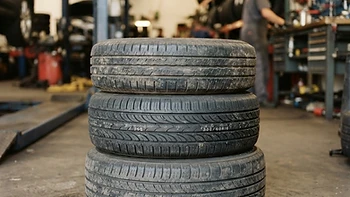
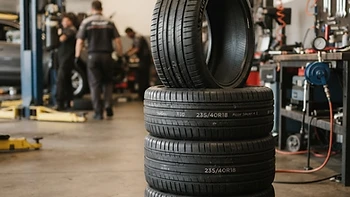
- Check the DOT Code: Always check the 4-digit DOT date code on the sidewall (e.g., '1224' means the 12th week of 2024). Even if the tread looks deep, rubber degrades. Any tire over six years old should be inspected closely, and tires over ten years old should be replaced regardless of tread depth.
The 1 PSI Rule: Why Precision Matters
Here is a concrete rule of thumb for every driver: Tire pressure changes by approximately 1 PSI for every 10°F change in outside temperature.
This matters immensely for run-flats. Because the sidewall is so stiff, a run-flat that is 5-8 PSI low won't show the typical 'bulge' at the bottom. If the temperature drops 30 degrees overnight, you could be driving on tires that are significantly underinflated, causing premature wear on those expensive reinforced shoulders. Check your pressures monthly using a high-quality digital gauge, not the beat-up stick gauge at the gas station.
What to do next
- Check your trunk: Confirm if you have a spare. If you have run-flats and no spare, ensure you have a roadside assistance plan active.
- Inspect your tread: Use a depth gauge to check for the legal limit of 2/32nds of an inch. If you're at 4/32nds, start shopping; wet-weather traction drops off significantly at this point.
- Verify your TPMS: If your light is on, don't ignore it just because the tire looks full. Use a gauge to verify all four tires match the placard inside your driver’s side door jamb.
- Plan for the 'Set' cost: If you decide to switch from run-flats to standard tires to save money or improve ride quality, remember you must replace all four at once and purchase a tire inflator kit or a 'donut' spare.
Find wheels for your car
Pick your make and model — we'll show you every wheel that fits your bolt pattern.
Get notified when new wheels are listed
New listings drop daily. Be the first to know when wheels for your car hit the marketplace. No spam, unsubscribe anytime.