The Airtight Truth: Mastering the Modern Rotating Assembly
Understand the critical differences between tube and tubeless systems, how unsprung mass dictates your ride quality, and why a perfectly balanced wheel assembly is more than just a lead weight.
Shop complete sets
Wheels + tires, ready to mount
Shop this article
Browse complete wheel sets


The Anatomy of the Assembly
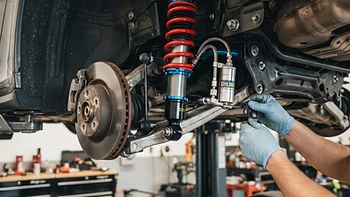
When you look at a wheel, you aren’t just looking at a piece of metal; you’re looking at a complex rotating assembly. This system includes the rim, the tire, the valve stem, the wheel bearings, and the balancing weights. Every component must work in harmony to manage the forces of friction, heat, and inertia.
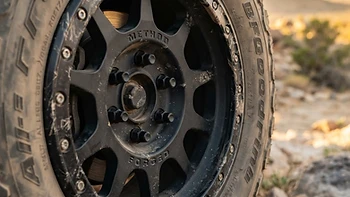
In the modern automotive marketplace, the primary distinction in these assemblies is how they hold air: tube-type versus tubeless. While the NHTSA and major manufacturers have made tubeless the passenger car standard, understanding the mechanics of both is essential for anyone dealing with vintage restorations, heavy-duty commercial fleets, or off-road builds.
Tube vs. Tubeless: The Sealing Revolution
In a tubeless assembly, the tire and the rim form a single airtight chamber. The tire’s bead is forced against the rim’s flange by internal air pressure, creating a seal. The rim itself must be non-porous and equipped with a sealed valve stem.
In contrast, tube-type assemblies use a separate inner rubber bladder to hold the air. These are still found in specific niches:
- Vintage/Classic Cars: Wire wheels often require tubes because the spoke nipples aren't airtight.
- Heavy Commercial/Off-Road: Some multi-piece rims used in industrial applications still utilize tubes, as noted by OSHA safety standards for mounting and dismounting.
Key Differences in Repair and Safety
Tubeless tires are generally safer at high speeds. When a tubeless tire is punctured, it typically loses air slowly because the tire material seals around the object. A tube, however, can rip or pop, leading to a rapid "blowout" scenario. Repairing a tubeless tire often involves a simple plug or internal patch-plug combo, whereas a tube-type failure usually requires a full tube replacement to ensure reliability.
Unsprung Mass: Why Weight Matters
Every pound you add to the wheel assembly is "unsprung mass"—weight not supported by the vehicle's suspension. According to data from Giti Commercial Tires, a tubeless assembly is approximately 10% lighter than a comparable tube-type setup.
Reducing this mass is critical for performance. Lower unsprung weight allows the suspension to react faster to road imperfections, keeping the tire in contact with the pavement. It also reduces the rotational inertia, meaning the engine doesn't have to work as hard to get the wheels spinning, which directly improves fuel efficiency and braking response.
Precision in Motion: Balancing and Runout
A wheel that is "true" is one that is perfectly round and centered. We measure this through runout:
- Radial Runout: The "out-of-roundness" of the tire (up and down movement).
- Lateral Runout: The side-to-side wobble of the wheel.
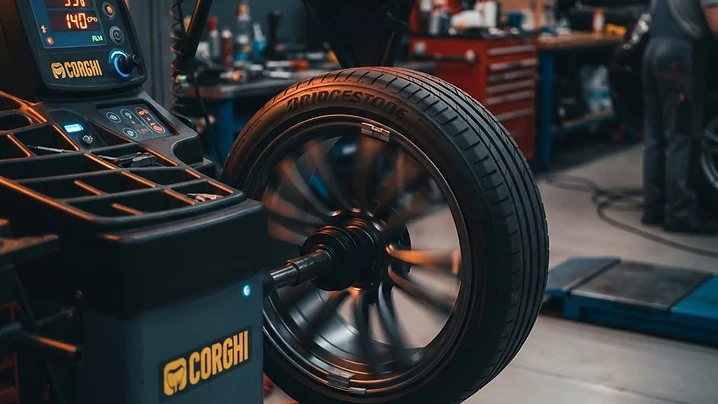
Even a perfectly true wheel needs balancing. As a shop tech, I see customers who think a vibration at 60 mph is a suspension issue, but it’s often just a lost 0.5-ounce lead weight. We use dynamic balancing to ensure weight is distributed evenly across both the inner and outer planes of the wheel.
The Rule of Thumb: The 1 PSI per 10°F Law
Here is the most important rule for any driver: Tire pressure changes by approximately 1 PSI for every 10°F change in ambient temperature.
This happens because air is a gas that expands when heated and contracts when cooled (the Ideal Gas Law). According to Tire Rack and the RMA, if you set your tires to 35 PSI on a 70°F afternoon, they could drop to 30 PSI by the time a 20°F cold front hits. Driving on underinflated tires increases the tire's footprint, creating excessive heat and potentially causing the sidewall to fail. Always check your pressures "cold"—before you’ve driven more than a mile.
Assembly Comparison Table
| Feature | Tubeless Assembly | Tube-Type Assembly | | :--- | :--- | :--- | | Weight | ~10% Lighter | Heavier (Tube + Flap) | | Heat Dissipation | Excellent (Direct to Rim) | Poor (Friction between tube/tire) | | Puncture Response | Slow Leak | Rapid Deflation | | Common Application | Modern Passenger/Light Truck | Vintage/Heavy Industrial | | Maintenance | Valve stem replacement | Tube/Flap inspection |
What to do next
- Check your door placard: Always follow the vehicle manufacturer’s recommended PSI, not the "Max PSI" listed on the tire sidewall.
- Inspect your weights: If you see a clean spot on your rim where a stick-on weight used to be, get a balance check immediately.
- Verify your valves: When replacing tubeless tires, always insist on new valve stems; rubber degrades over time and is a common source of slow leaks.
- Monitor the bearings: If you hear a rhythmic growl that changes pitch with vehicle speed, have your wheel bearings inspected for play or heat damage.
Find wheels for your car
Pick your make and model — we'll show you every wheel that fits your bolt pattern.
Get notified when new wheels are listed
New listings drop daily. Be the first to know when wheels for your car hit the marketplace. No spam, unsubscribe anytime.