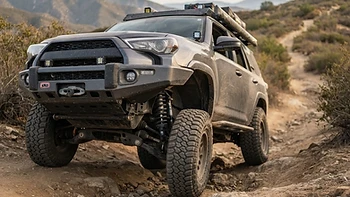
Beyond the Bolt Pattern: Why Wheel Load Rating is the Most Important Spec You’re Ignoring
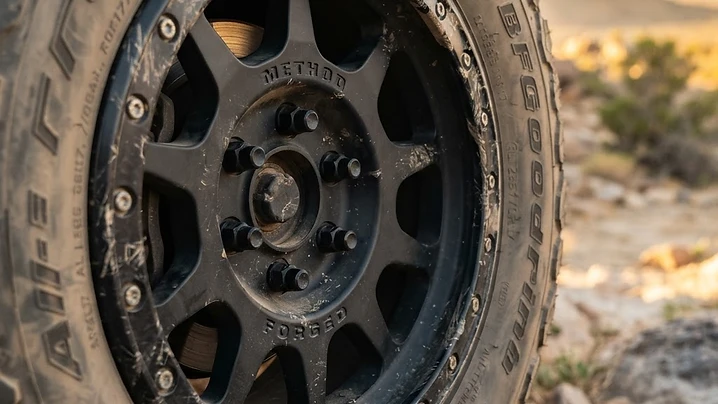
Learn how to calculate the correct wheel load rating for your off-road rig to prevent catastrophic rim failure during high-impact trail maneuvers.
Shop off-road parts
Browse off-road gear
The Hidden Danger of Under-Rated Wheels
You have the 35-inch mud-terrain tires, the long-travel suspension, and the perfect offset. But if you haven't checked your wheel load ratings, your build might be a ticking time bomb. While most enthusiasts focus on aesthetics and fitment, the load rating—the maximum weight a wheel is certified to carry—is the most critical safety spec for any vehicle leaving the pavement.
Off-road environments create unique stresses that go far beyond typical highway driving. According to Hardrock Offroad, impacts from rocks, sudden weight transfers during articulation, and shock loads from drops or jumps place extreme demands on your wheels. A wheel rated for street use might survive a pothole, but it can crack or shatter when subjected to the dynamic forces of a loaded overlanding rig coming off a ledge.
Calculating Your Rig’s Real-World Requirements
Choosing wheels that meet or exceed your vehicle's weight ensures your build can safely handle added tire weight, cargo, and off-road impact forces, as noted by Fuel Off-Road Wheels. To find your minimum requirement, do not simply divide your vehicle's total weight by four.
- Check the GVWR: Look at the sticker inside your driver-side door jamb for the Gross Vehicle Weight Rating (GVWR) and the Gross Axle Weight Rating (GAWR) for the rear.
- Account for the Rear Axle: In overlanding, the rear axle often carries the brunt of the weight (tents, drawers, water, fuel). Use the Rear GAWR as your baseline.
- The Safety Margin: Divide the Rear GAWR by two, then add a 20-25% safety buffer to account for dynamic shock loads. If your rear GAWR is 3,600 lbs, your minimum wheel rating should be at least 1,800 lbs, but 2,100+ lbs is safer for trail work.
Material Matters: Cast vs. Forged
How a wheel is made directly impacts its ability to handle these loads.
- Cast Aluminum: The most common and affordable. However, Overland Expo points out that cast wheels are generally less durable than forged options and are more prone to cracking under extreme stress.
- Forged Aluminum: These wheels are compressed under immense pressure, creating a denser grain structure. Dhwheel notes that forged wheels resist bending and cracking significantly better than cast ones, making them the gold standard for heavy-duty off-roading.
- Steel: While heavy, steel wheels are famous for their "trail repairability." A bent steel lip can often be hammered back into shape to hold air, whereas an aluminum wheel will simply snap.
Buyer’s Checklist for Trail Durability
- Verify the Stamp: Look for the load rating stamped on the back of the wheel spoke or hub. If it isn't there, ask the manufacturer for the certified testing data.
- Match the Tire: Ensure your tire’s load index matches or exceeds the wheel’s capacity. A high-rated tire on a low-rated wheel creates a weak link.
- Inspect Regularly: After a weekend of rock crawling, inspect your wheels for hairline cracks, especially around the lug holes and the inner barrel.
Find wheels for your car
Pick your make and model — we'll show you every wheel that fits your bolt pattern.
Get notified when new wheels are listed
New listings drop daily. Be the first to know when wheels for your car hit the marketplace. No spam, unsubscribe anytime.