Understanding Rims and Tires
New to buying wheels online? A plain-English primer on rim and tire basics — the specs that matter, how to read our A–D condition grades, and what to check before you buy.
Shop complete sets
Wheels + tires, ready to mount
Shop this article
Browse complete wheel sets


Rims, Wheels, and Tires: Getting the Terms Straight
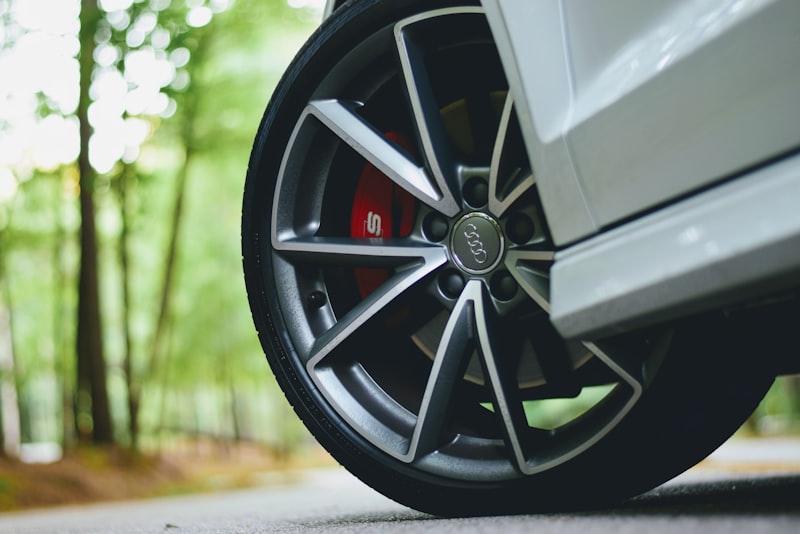
Most buyers use "rim" and "wheel" interchangeably, and on a marketplace like this one, that's fine — everyone knows what you mean. Technically, the wheel is the entire metal assembly that bolts to your hub, and the rim is just the outer lip where the tire seats. The tire is the rubber component mounted onto that rim and filled with air. When you buy a "rim" here, you're buying the wheel; when you buy a tire, you're buying the rubber that goes on it. Complete sets bundle both together, already mounted and balanced.
The Wheel Specs That Actually Matter
Four numbers determine whether a wheel will physically fit your car:
- Diameter — the wheel's size in inches, measured across the bead seats, not including the tire. It has to match what your car is designed for, or be close enough that a matching tire size exists.
- Width — how wide the wheel is, also in inches, usually written like 8.5J or just 8.5.
- Bolt pattern — the number of lug holes and the diameter of the circle they sit on, written like 5x114.3 (5 lugs, 114.3mm apart). Get this wrong and the wheel won't bolt on at all.
- Offset (ET) — how far the mounting face sits from the wheel's centerline, in millimeters. Too far in either direction and the wheel can rub on your suspension, brakes, or fenders.
There's a fifth number worth knowing: centerbore, the diameter of the hole in the middle of the wheel that centers it on your hub. A too-large centerbore usually just needs a cheap hub-centric ring; a too-small one means the wheel won't fit over your hub at all.
If you don't know these numbers for your car, use the "Does It Fit My Car?" tool on any listing — it checks a wheel's specs against your vehicle's factory fitment data before you buy.
Reading a Tire's Sidewall
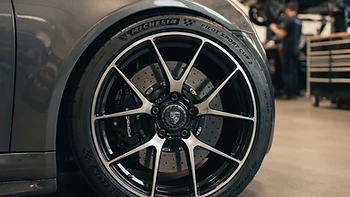
Every tire has its full size molded into the sidewall, in a format like 225/45R17 94W:
- 225 — section width in millimeters.
- 45 — aspect ratio, the sidewall height as a percentage of that width.
- R17 — radial construction, mounted on a 17-inch wheel.
- 94W — load index (how much weight it can carry) and speed rating (its top safe sustained speed).
There's also a DOT date code — four digits near the end of a longer string, read as week-then-year (for example, 2223 means the 23rd week of 2023). Tire age matters as much as tread depth: rubber hardens and cracks over time even on a tire that's barely been driven, so "low mileage" alone doesn't make a tire safe.
How We Grade Condition
Every listing on RimRevival shows a standardized condition grade, A through D, so you can compare items at a glance without digging through every photo:
- Grade A — new or like-new, with no meaningful wear.
- Grade B — good condition: normal light wear, fully functional, nothing that affects fitment or safety.
- Grade C — fair condition: noticeable cosmetic wear or reduced remaining tread, still usable.
- Grade D — damaged or sold as-is, with specific defects disclosed on the listing.
The grade is a starting point, not a substitute for reading the listing itself. Sellers disclose specific condition details — curb rash, tread depth, cracks, prior repairs — in the description and photos, and you'll be asked to acknowledge any disclosed issues before checkout.
What to Check Before You Buy Used
- Curb rash vs. structural damage. Light scuffing on the outer lip is cosmetic. Cracks, bends, or flat spots on the barrel are not — those are safety issues, not cosmetic ones.
- Tread depth and wear pattern. Even wear across the tread is normal; cupping, feathering, or wear concentrated on one edge usually points to an alignment or suspension issue on the vehicle it came off of, not a flaw in the tire itself.
- Matching sets. Mismatched tire brands or tread patterns across an axle can affect handling, especially on all-wheel-drive vehicles.
- The fitment numbers above. Confirm diameter, width, bolt pattern, and offset against your car before buying, not after it arrives.
Buying With Confidence
Every purchase on RimRevival is held in escrow. Payment is collected at checkout, the seller is paid for shipping right away so your order goes out promptly, and the item price itself is released to them a few days after delivery — giving you a window to inspect what arrived before the sale is final. If something doesn't match the listing, you can raise it during that window instead of just hoping it works out.
Find wheels for your car
Pick your make and model — we'll show you every wheel that fits your bolt pattern.
Get notified when new wheels are listed
New listings drop daily. Be the first to know when wheels for your car hit the marketplace. No spam, unsubscribe anytime.