How to Check Hub Runout and Why It Matters

Hub runout causes vibrations that no amount of wheel balancing can fix. Here is how to measure it with a dial indicator and what the numbers mean.
How to Check Hub Runout and Why It Matters
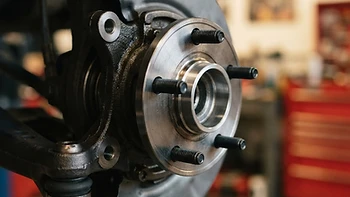
Hub runout is the amount the hub face deviates from perfectly true as it rotates. Even a few thousandths of an inch of runout causes vibrations that no amount of wheel balancing can fix — because the problem is not the wheel, it is the hub.
What Causes Hub Runout
The hub face can become untrue from:
- Impact damage — hitting a pothole or curb bends the hub flange.
- Corrosion — rust buildup between the hub and rotor pushes the face outward unevenly.
- Wear — the hub bearing wears and allows the hub to wobble.
- Improper machining — a rotor turned on a lathe with a dirty or bent hub transfers the runout to the rotor.
How to Measure
You need a dial indicator with a magnetic base.
- Jack up the car and support it safely. Remove the wheel.
- Mount the dial indicator so the tip rests on the hub face, about 1 inch from the center.
- Zero the indicator.
- Rotate the hub one full revolution and record the total indicator reading (TIR) — the difference between the highest and lowest points.
What the Numbers Mean
- 0.001 inch or less = excellent, no concern
- 0.002-0.003 inch = acceptable but worth monitoring
- 0.004+ inch = excessive — the hub should be replaced or the cause (corrosion, bearing wear) corrected
Symptoms of Hub Runout
The most common symptom is a brake pedal pulsation — a shudder felt through the pedal when braking from highway speeds. This happens because the uneven hub face pushes the rotor in and out as it rotates, causing uneven pad contact and material transfer onto the rotor surface.
Wheel balance vibrations from hub runout are less common but happen when the runout is severe enough to move the wheel in and out as it spins. The vibration feels like an out-of-balance tire but does not change with different wheels.
The Difference Between Hub Runout and Wheel Runout
Wheel runout (lateral) is the wheel itself being untrue — bent or poorly manufactured. Hub runout is the hub being untrue. The symptom is the same — vibration — but the fix is different.
To isolate: mount a dial indicator on the wheel face and rotate. If the wheel face runs true but the hub runs out, the hub is the problem. If both run out, check the hub first — the wheel may be fine.
Fixing Hub Runout
- Clean the hub face — corrosion is the most common cause. A wire brush and careful cleaning can eliminate 0.003+ of runout.
- Replace the hub bearing — if the bearing is worn, the hub wobbles.
- Replace the hub — if the flange is bent from impact, the hub assembly must be replaced.
- Index the rotor — rotate the rotor to find the position with the least runout combination.
The Takeaway
If you have a vibration that wheel balancing does not fix, check hub runout before chasing more expensive causes. A $40 dial indicator and 20 minutes can identify a problem that tire shops have been throwing balance weights at for months.
Find wheels for your car
Pick your make and model — we'll show you every wheel that fits your bolt pattern.
Get notified when new wheels are listed
New listings drop daily. Be the first to know when wheels for your car hit the marketplace. No spam, unsubscribe anytime.