Beyond the Load Rating: Understanding Torque Reversal and EV Wheel Fatigue
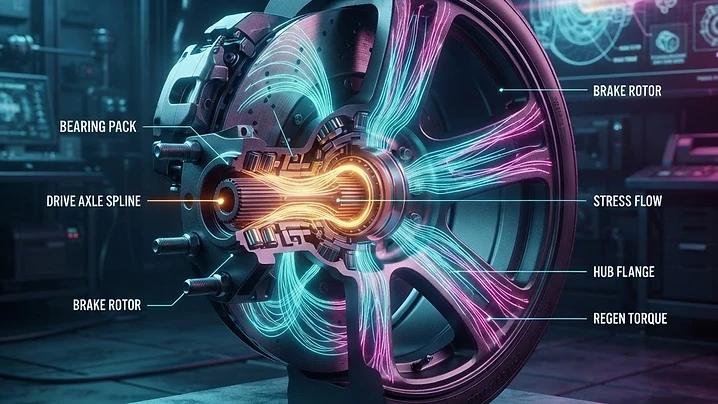
Most EV owners focus on weight, but the hidden stressor is torque reversal from regenerative braking. Learn how to choose wheels that handle the unique fatigue cycles of high-performance electric drivetrains.
Shop EV tires
Browse EV-rated tires
The Hidden Stress of Regenerative Braking
When enthusiasts shop for EV wheels, the conversation usually centers on two things: aerodynamic efficiency and weight. While these are critical for range, a more technical factor is often overlooked—structural fatigue caused by constant torque reversals.
In a traditional internal combustion engine (ICE) vehicle, wheels primarily experience high torque in one direction (acceleration) and friction-based braking that applies force through the calipers. However, electric vehicles utilize regenerative braking, which applies a significant reverse torque through the hub every time you lift off the accelerator. According to EV Forged Wheels Load Rating Guide | Tesla and BYD | LFI Wheels, these torque reversals act as additional fatigue cycles. For a mid-sized EV, the frequency and intensity of these cycles can reach levels typically seen only in high-performance track cars.
Why GAWR is Your Most Important Metric
Before looking at styles, you must look at your vehicle’s Gross Axle Weight Rating (GAWR). Because of heavy battery packs, EVs often have a rear GAWR that exceeds the capacity of standard aftermarket wheels. As noted in What Does EV Wheel Size Have To Do With Electric Range?, selecting a wheel that cannot accommodate the hefty curb weight is a safety risk.
If your EV has a rear GAWR of 1,410 kg, each wheel must be rated for at least 705 kg. Many standard forged wheels are only tested to 690 kg, which is insufficient for heavy-hitters like the Tesla Model X or Audi e-tron. If the load exceeds the rating, the failure mode is identical regardless of the powertrain: the wheel structure will eventually yield under stress.
Forged vs. Cast: The Durability Gap
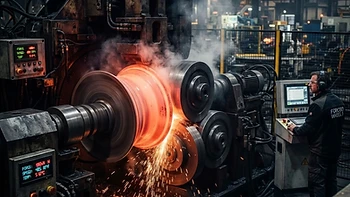
To combat both the weight and the fatigue of torque reversals, the manufacturing process matters.
- Fully Forged Wheels: These are created by forcing a raw block of metal into shape under extreme pressure. This creates a denser grain structure that is better at resisting the fatigue cycles of regenerative braking. EV Weight Impact on Range — Tesla Owners of Silicon Valley highlights that fully forged wheels are the lightest and strongest option, helping to recover 2% to 4% of range loss when upsizing.
- Flow Formed/Cast Wheels: While more affordable, these often lack the structural density to handle high-torque EVs over long periods without increased risk of cracking under heavy loads.
Actionable Buyer Tips
- Check the Door Placard: Find your GAWR and divide by two. Never buy a wheel with a load rating lower than this number.
- Prioritize Hub-Centric Designs: Given the instant torque of EVs, hub-centric wheels ensure the load is supported by the hub rather than just the lug studs, reducing vibration and stress.
- Look for HL Ratings: If you are also buying tires, ensure they are High Load (HL) rated if your vehicle exceeds XL (Extra Load) capacities, as suggested by Optimize your EV with tires rated for a higher load capacity | Michelin USA.
Find wheels for your car
Pick your make and model — we'll show you every wheel that fits your bolt pattern.
Get notified when new wheels are listed
New listings drop daily. Be the first to know when wheels for your car hit the marketplace. No spam, unsubscribe anytime.