The Performance Math: Why Your Wheel’s Manufacturing Method Matters More Than Its Style
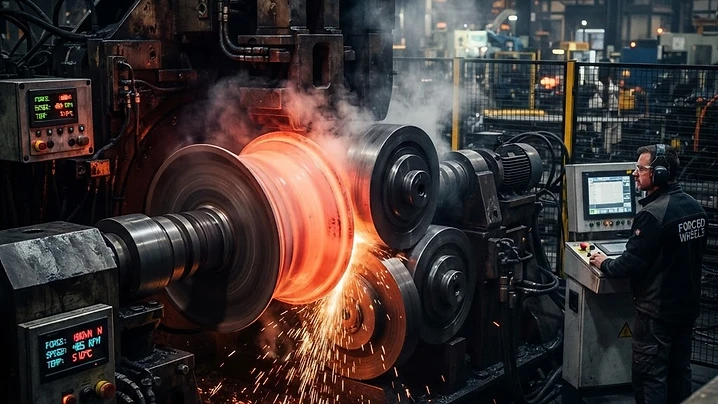
Learn how casting, flow forming, and forging affect your car's unsprung weight and handling, helping you choose the right wheel for your driving style.
Beyond Aesthetics: The Engineering of Unsprung Mass
When shopping for wheels at RimRevival, it is easy to get distracted by finishes and spoke patterns. However, the manufacturing process—how that metal is shaped—dictates your car’s acceleration, braking, and suspension response. Wheels are "unsprung mass," meaning they aren't supported by the car's springs. Reducing this weight is the most effective way to sharpen handling.
1. Gravity and Low-Pressure Casting
Casting is the most common manufacturing method. Molten aluminum is poured or drawn into a mold to form the wheel's shape. While cost-effective, the cooling process can lead to porosity—tiny air bubbles or inconsistencies in the metal structure Street Muscle Mag.
- The Trade-off: To ensure safety despite potential porosity, manufacturers must use more material, making cast wheels significantly heavier than other types.
- Best For: Daily drivers and show cars where budget is the priority over lap times.
2. Flow Forming: The Performance Sweet Spot
Flow forming (often marketed as "Rotary Forged") starts as a specialized cast "preform" with a thick, short barrel. This preform is heated and spun while high-pressure rollers stretch the barrel to its final width Valor Offroad.
This process mechanically compresses the aluminum, aligning the grain structure similarly to a forged wheel. This results in a barrel that is thinner, lighter, and has much higher tensile strength than a standard cast wheel KIPARDO.
- The Trade-off: The face of the wheel remains cast, but the barrel—where most weight resides—gains forged-like properties.
- Best For: Enthusiasts looking for a track-capable wheel without the "forged tax."
3. Fully Forged: The Gold Standard
Forged wheels begin as a solid billet of 6061-T6 aluminum. A massive press (often exerting thousands of tons of force) crushes the metal into a dense shape before it is CNC-machined into the final design American Racing.
Because the grain flow is continuous throughout the entire wheel, forged rims can be engineered with much thinner spokes and lighter hubs while remaining stronger than any cast alternative Forgelite Wheels.
- The Trade-off: High production costs and specialized machinery make these the most expensive option.
- Best For: Competitive racing and high-horsepower builds where every ounce of weight reduction matters.
Buyer’s Checklist: Choosing Your Tech
- Check the Load Rating: Regardless of the method, ensure the wheel is rated for your vehicle’s weight, especially for heavy EVs or SUVs Speed Academy.
- Identify Your Use Case: If you use sticky 200-treadwear tires for autocross, avoid entry-level cast wheels, which can flex or crack under high lateral loads Street Muscle Mag.
- Weight vs. Price: A flow-formed wheel typically offers a 15-25% weight reduction over casting for a modest price increase, making it the best value for most enthusiasts.
Find wheels for your car
Pick your make and model — we'll show you every wheel that fits your bolt pattern.
Get notified when new wheels are listed
New listings drop daily. Be the first to know when wheels for your car hit the marketplace. No spam, unsubscribe anytime.