Beyond the Bolt-On: How Camber, Caster, and Toe Protect Your New Wheel and Spring Setup

Dropping a car on lowering springs or fitting aggressive aftermarket wheels instantly alters suspension geometry. Here is the tech's breakdown of camber, caster, toe, and why skipping the alignment rack destroys tires.
Shop tires
Browse all available tires
Shop this article
Browse all tires
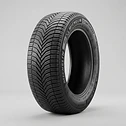
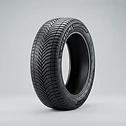
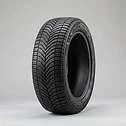
It happens every week in the shop: a customer pulls in riding on brand-new flow-formed wheels and high-performance summer rubber, only to complain that the car pulls hard to the right or that their $1,200 tire investment is bald on the inside shoulders after just 4,000 miles. When we ask when they last put the car on an alignment rack, the answer is almost always the same: “Never—the shop just bolted the springs and wheels on.”
Wheel alignment is not simply about keeping the steering wheel centered. It is the precise calibration of suspension geometry relative to the road surface. When you alter wheel offset, increase rim width, or lower your ride height by even 1 inch, you fundamentally change how your tires touch the pavement. Neglect the rack, and your tires will scrub themselves to cords before your next oil change.
The Big Three: Camber, Caster, and Toe
Suspension technicians tune three primary angles to ensure stability, grip, and even treadwear according to engineering targets set by manufacturers and organizations like the Tire Rack.
1. Camber (The Tilt Angle)
View your vehicle directly from the front bumper. If the tops of the tires tilt inward toward the engine bay, that is negative camber. If they tilt outward, that is positive camber.
- Why it matters: In hard cornering, body roll forces the outside tire flat against the road. A modest amount of negative camber (factory specs typically call for -0.5° to -1.5° on road cars) maximizes the cornering contact patch.
- The penalty: Excessive negative camber concentrates the vehicle's weight on the inner tread ribs. If you drop below -2.5° without track-level lateral loading, you will burn through the inside shoulder down to the steel belts.
2. Caster (The Steering Pivot Axis)
Look at your front wheel from the side profile. Draw an imaginary line straight through the upper and lower ball joints (or the strut top mount to the lower ball joint). If the steering axis tilts toward the cabin at the top, you have positive caster.
- Why it matters: Caster creates the self-centering torque that snaps your steering wheel back to straight after a turn, providing high-speed directional tracking on the interstate.
- The penalty: While incorrect caster rarely eats tires directly, cross-caster (a difference between left and right sides greater than 0.5°) creates a severe, continuous pull toward the side with less positive caster.
3. Toe (The Directional Direction)
Look down at your front tires from a bird’s-eye view. If the fronts of the tires point inward toward each other, that is toe-in. If they flare outward, that is toe-out.
- Why it matters: Measured in thirty-seconds of an inch or fractions of a degree, toe determines straight-line tracking and turn-in sharpness. Most rear-wheel-drive passenger cars run a slight toe-in (e.g., 1/16-inch total) to balance rolling resistance once road drag pushes the front tires slightly rearward.
- The penalty: Toe is the absolute tire killer. Just 1/8-inch of excess toe creates a relentless scrubbing action across the pavement, mimicking the effect of dragging a tire sideways for hundreds of miles. As Bridgestone notes, misadjusted toe produces a distinct "feathering" across the tread blocks.
Alignment Geometry and Symptoms at a Glance
| Alignment Angle | Ideal Street Target | Common Driver Symptom When Out | Visible Tread Wear Pattern | | :--- | :--- | :--- | :--- | | Camber | -0.5° to -1.5° | Vehicle pulls toward side with more positive angle | Smooth inner-shoulder wear (negative) or outer wear (positive) | | Caster | +3.0° to +7.0° | Wandering at highway speeds; failure to self-center | Negligible direct wear; causes wandering or stiff steering | | Toe (Total) | 0° to 1/16" (toe-in) | Wandering, nervous darting, off-center steering wheel | Sawtooth feathering across ribs; rapid total tread loss |
The Rule of Thumb: The 1/8-Inch Toe Drag Rule
A solid rule of thumb seasoned chassis techs rely on:
Every 1/8-inch (0.125") of unintended total toe misalignment is mechanically equivalent to dragging your tires sideways 28 to 30 feet for every single mile you travel.
Think about that math. On a 100-mile highway road trip, an improperly aligned front end scrubs your tires across the pavement sideways for over half a mile. This scrub rapidly generates friction heat, increases rolling resistance, drops fuel economy by 3% to 5%, and ruins a 50,000-mile treadwear warranty in less than 8,000 miles.
Why Lowering Springs and New Wheels Demand a Realignment
Many enthusiasts believe that if they retain their factory control arms, geometry remains unchanged. That is a myth governed by kinematics.
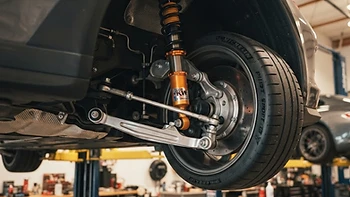
- Suspension Arc Travel: Modern independent suspensions (MacPherson struts and multi-link systems alike) travel along an arc. When lowering springs drop a vehicle 1.0 to 1.5 inches, the lower control arms swing upward, naturally forcing the knuckle into deeper negative camber and pushing the steering tie-rods into aggressive toe-out.
- Scrub Radius Alterations: Upgrading to wider aftermarket rims with lower offsets (for instance, dropping from an OEM +45mm offset to a +30mm aggressive stance) moves the tire's centerline outward. This alters the scrub radius—the distance between where the steering axis intersects the pavement and the center of the tire footprint—amplifying road imperfections and tramlining.
- Bushing Settling: New lowering springs settle over the first 100 to 300 miles as the coils seat into rubber isolators, continuing to shift suspension angles.
According to NHTSA collision statistics, tire-related crashes account for thousands of preventable highway incidents annually, with inadequate tread depth playing a decisive role. Allowing misaligned suspension to chew your tires down to 2/32nds of an inch dramatically increases hydroplaning risks.
What to Do Next
- Let New Springs Settle: If you just installed lowering springs or coilovers, drive 150 to 250 miles of normal street driving before putting the vehicle on the alignment rack so the ride height stabilizes.
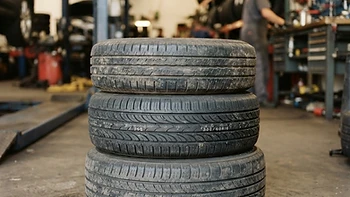
- Perform the Feathering Palm Test: Once a month, slide your bare palm across the width of your front tire tread from the outside sidewall to the inside. If the edges feel smooth moving inward but catch sharp "sawtooth" ridges dragging back out, your toe is out of spec.
- Measure Tread Depths in Three Grooves: Use an inexpensive $5 mechanical tread depth gauge to check the outer, middle, and inner grooves across each tire. If the inner shoulder measures 4/32" while the outer shoulder reads 8/32", negative camber or severe toe-out is stripping your rubber.
- Request a Computerized 4-Wheel Spec Sheet: When you take your car in, insist on a 4-wheel computerized rack (such as a Hunter Hawkeye Elite). Demand a printout showing before and after numbers for primary camber, caster, toe, and total thrust angle—never settle for a "toe-and-go" quick adjust.
Find wheels for your car
Pick your make and model — we'll show you every wheel that fits your bolt pattern.
Get notified when new wheels are listed
New listings drop daily. Be the first to know when wheels for your car hit the marketplace. No spam, unsubscribe anytime.