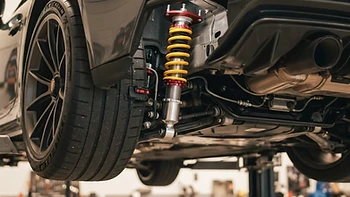
Beyond Horsepower: Why Unsprung Weight is the Ultimate Suspension Upgrade
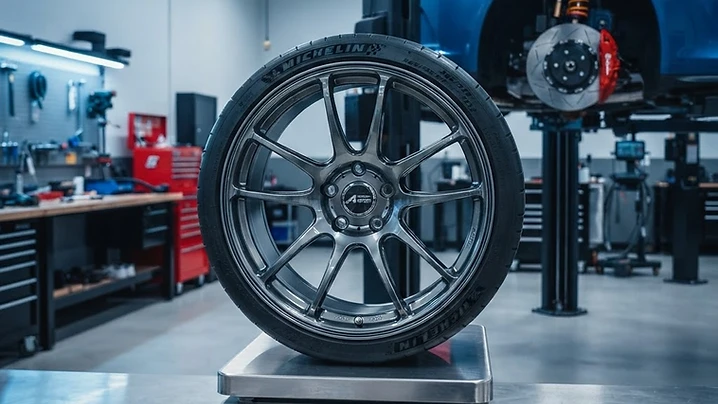
Learn how reducing the weight of your wheels, tires, and brakes can transform your car's handling and grip more effectively than adding power.
Shop suspension
Browse sport suspension parts
Shop this article
Browse sport suspension
Crown Automotive Wheel Spacer Set (2), 5 on 5.5"
$178.5

Wheel Spacers 5x112 12mm 66.6mm Hub Centric fits Mercedes
$4.5

Original Gorilla Lock Set - Acorn Bulge - 3/4" Hex - 1/2"-20 Thread Size - Chrome Finish - Set of 5 (71481NB5)
$45

McGard 27226 Chrome Bolt Style Cone Seat Wheel Lock Set (M14 x 1.25)
$44.99
The Hidden Performance Killer
When enthusiasts look to improve lap times or street handling, they usually reach for stiffer springs or more horsepower. However, the most significant bottleneck in your suspension’s performance isn't the spring rate—it is unsprung weight.
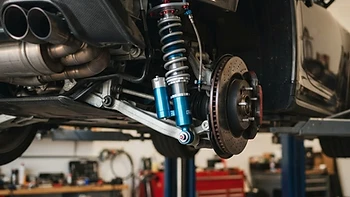
Unsprung weight (or mass) refers to every component not supported by your car's springs. This includes your wheels, tires, brake rotors, calipers, and even a portion of your control arms and drive shafts. Because these parts sit "below" the suspension, they are forced to react to every bump and dip in the road instantly.
The Physics of Response
Think of your suspension as a goalie. If the goalie is wearing heavy lead boots, they cannot move their feet fast enough to block a quick shot. Similarly, a heavy wheel-and-tire combo has high inertia. When you hit a mid-corner bump, a heavy wheel wants to keep moving upward, momentarily losing contact with the pavement.
By reducing unsprung weight, you allow your coilovers to do their job more effectively. A lighter wheel can be pushed back down to the road surface much faster, maintaining a consistent tire contact patch. This results in:
- Improved Mechanical Grip: The tire stays glued to the road rather than bouncing over it.
- Sharper Steering: Less rotational mass means the front wheels respond to steering inputs with less resistance.
- Better Damping: Your shocks don't have to fight the kinetic energy of a heavy mass, leading to a more controlled ride.
The "4-to-1" Rule of Thumb
While the exact physics vary by vehicle, a common industry benchmark is that removing one pound of unsprung weight is equivalent to removing four pounds of "sprung" weight (the weight of the chassis and interior). If you switch from a 28-lb cast wheel to a 19-lb forged wheel, you aren't just saving 36 lbs total; the performance gain in terms of acceleration and suspension response feels like you’ve stripped over 140 lbs out of the cabin.
Buyer’s Checklist for Reducing Unsprung Mass
When shopping the RimRevival marketplace, use these criteria to optimize your setup:
- Prioritize Wheel Construction: Flow-formed or fully forged wheels are significantly lighter than traditional gravity-cast wheels.
- Check Tire Weights: Not all tires are created equal. Two tires of the same size can differ by 3–5 lbs depending on the sidewall construction and compound.
- Consider Two-Piece Rotors: If you are upgrading your brakes, two-piece rotors with aluminum hats can shave several pounds of rotating mass directly at the hub.
- Don't Over-Size: A 19-inch wheel might look better, but if an 18-inch wheel clears your brakes, the smaller diameter usually offers a lighter package and better rotational inertia.
Actionable Tip: The Scale Test
Before installing your new setup, weigh your old wheel/tire combo and your new one. If you’ve managed to shave even 3 lbs per corner, you will likely need to soften your rebound damping on your coilovers, as the suspension no longer needs to work as hard to control the wheel's movement.
Find wheels for your car
Pick your make and model — we'll show you every wheel that fits your bolt pattern.
Get notified when new wheels are listed
New listings drop daily. Be the first to know when wheels for your car hit the marketplace. No spam, unsubscribe anytime.
Related listings
Browse sport suspensionCrown Automotive Wheel Spacer Set (2), 5 on 5.5"
$178.5
Wheel Spacers 5x112 12mm 66.6mm Hub Centric fits Mercedes
$4.5
Original Gorilla Lock Set - Acorn Bulge - 3/4" Hex - 1/2"-20 Thread Size - Chrome Finish - Set of 5 (71481NB5)
$45
McGard 27226 Chrome Bolt Style Cone Seat Wheel Lock Set (M14 x 1.25)
$44.99
Keep reading

Spring Rate, Wheel Rate, and Motion Ratio: The Number on the Spring Isn't the Whole Story
7 min
Sway Bars and Chassis Bracing: Tightening Up the Handling
5 min
Coilovers 101: What to Know Before You Drop Your Ride
6 min