The Physics of Grip: Why Cold Inflation Pressure Dictates Your Suspension’s Performance
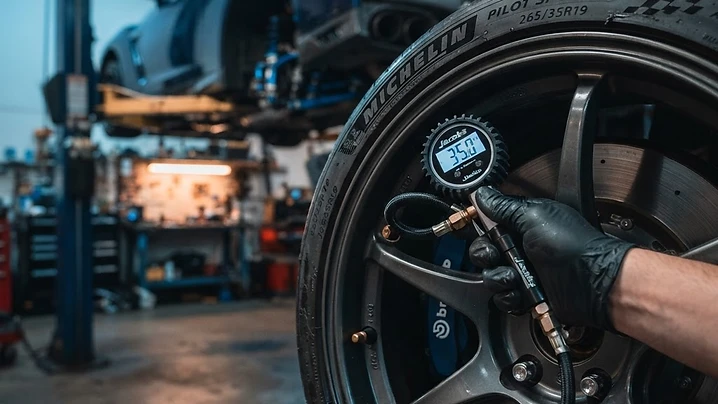
Setting your tire pressure isn't just about the door jamb sticker; it's about understanding how heat and physics affect your alignment and suspension hardware.
Shop accessories
Browse suspension & hardware
Shop this article
Browse suspension accessories
Crown Automotive Wheel Spacer Set (2), 5 on 5.5"
$178.5

Wheel Spacers 5x112 12mm 66.6mm Hub Centric fits Mercedes
$4.5

Original Gorilla Lock Set - Acorn Bulge - 3/4" Hex - 1/2"-20 Thread Size - Chrome Finish - Set of 5 (71481NB5)
$45

McGard 27226 Chrome Bolt Style Cone Seat Wheel Lock Set (M14 x 1.25)
$44.99
The Foundation of Your Footprint
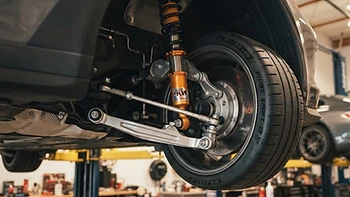
When you spend money on high-end suspension hardware—camber plates, polyurethane bushings, or adjustable end links—you are investing in the precision of your vehicle’s geometry. However, that precision is entirely dependent on the four patches of rubber touching the pavement. As an experienced tech, I can tell you that the most common way drivers sabotage their new suspension setup is by misunderstanding tire pressure dynamics.
Specifically, the difference between cold inflation pressure and hot running pressure. If you get this wrong, your expensive alignment kit won't save you from uneven tire wear or unpredictable handling.
What "Cold" Actually Means
In the automotive world, "cold" doesn't refer to a winter morning in Michigan. According to Tire Rack, cold inflation pressure is defined as the pressure measured before a vehicle has been driven, or after it has been parked for at least three hours.
Why the wait? Even driving just one mile generates enough internal friction and sidewall flexing to raise the temperature of the air inside the tire. If you check your pressure at a gas station after a ten-minute drive, you aren't looking at a baseline; you're looking at a moving target. According to NHTSA, tires can be considered "hot" after just one hour of highway driving, often showing a significant increase over the door jamb recommendation.
The Rule of Thumb: 1 PSI per 10°F
Air is a gas, and gases follow Gay-Lussac’s Law: in a contained environment (like a tire), pressure is directly proportional to temperature. The industry-standard rule of thumb is that tire pressure changes by approximately 1 PSI for every 10°F change in ambient temperature Wikipedia.
This means if you set your tires to 35 PSI on a 70°F afternoon, and a cold front drops the temperature to 30°F overnight, you’ll wake up to 31 PSI. The air didn't leak; it simply contracted. This is why TPMS lights often trigger on the first cold morning of autumn.
Pressure Variance by Temperature (Baseline 35 PSI at 70°F)
| Ambient Temperature (°F) | Estimated Pressure (PSI) | Change from Baseline | | :--- | :--- | :--- | | 100°F | 38.0 PSI | +3.0 PSI | | 70°F (Baseline) | 35.0 PSI | 0.0 PSI | | 40°F | 32.0 PSI | -3.0 PSI | | 10°F | 29.0 PSI | -6.0 PSI |
Why You Never "Bleed" a Hot Tire
It is a common mistake: a driver sees their pressure has risen to 40 PSI during a summer road trip when the door jamb says 35 PSI, so they let air out. Never do this.
Engineers at companies like Ford and Hoosier factor in a 10% to 20% pressure rise for normal operating conditions. If you bleed a hot tire down to the "cold" spec, that tire will be dangerously under-inflated once it cools down. Under-inflation causes the sidewall to flex excessively, which generates even more heat—a vicious cycle that can lead to tire separation or catastrophic failure.
Furthermore, under-inflation changes your effective alignment. It increases the tire's slip angle and can make your steering feel "mushy," effectively neutralizing the benefits of those stiff new strut mounts or sway-bar end links you just installed.
The Impact on Suspension Hardware
Your suspension components—bushings, spacers, and bump stops—are designed to work within a specific range of motion.
- Bushings and End Links: Incorrect pressure changes the ride height and the angle of the control arms. This puts premature stress on rubber or polyurethane bushings.
- Camber/Caster Plates: If your tires are under-inflated, the footprint deforms, making your precise camber settings irrelevant because the tire isn't maintaining a flat contact patch.
- Bump Stops: Low pressure allows the tire to compress more under load, which can lead to the suspension bottoming out against the bump stops more frequently, harshing the ride and potentially damaging the strut valving.
Market Context and Driver Habits
Data suggests that many drivers are neglecting this basic maintenance. According to Wikipedia, roughly 40% of passenger cars have at least one tire under-inflated by 6 PSI or more. In a marketplace like RimRevival, where enthusiasts are buying spacers to achieve a specific "flush" fitment or alignment kits for track days, these small PSI deviations can be the difference between a car that handles like it's on rails and one that feels disconnected.
What to do next
- Buy a high-quality digital gauge: Don't rely on the "pencil" gauges at the gas station; they are notoriously inaccurate.
- Check before the sun hits the tires: Direct sunlight can increase tire temperature (and thus pressure) even if the car hasn't moved Hoosier.
- Adjust for the season: If you live in a region with 40-degree swings between seasons, you must adjust your air levels at least four times a year to maintain the cold spec.
- Ignore the "Max PSI" on the sidewall: That number is the maximum the tire can hold at maximum load, not the recommended setting for your specific vehicle. Always use the placard on your driver’s side door pillar.
- Inspect your hardware: If you find you are constantly losing pressure, check your valve stems and the seals on your aftermarket wheels before blaming the tires.
Find wheels for your car
Pick your make and model — we'll show you every wheel that fits your bolt pattern.
Get notified when new wheels are listed
New listings drop daily. Be the first to know when wheels for your car hit the marketplace. No spam, unsubscribe anytime.
Related listings
Browse suspension accessoriesCrown Automotive Wheel Spacer Set (2), 5 on 5.5"
$178.5
Wheel Spacers 5x112 12mm 66.6mm Hub Centric fits Mercedes
$4.5
Original Gorilla Lock Set - Acorn Bulge - 3/4" Hex - 1/2"-20 Thread Size - Chrome Finish - Set of 5 (71481NB5)
$45
McGard 27226 Chrome Bolt Style Cone Seat Wheel Lock Set (M14 x 1.25)
$44.99