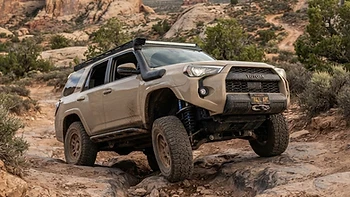
Air Down for the Trail: Tire Pressure, Beadlocks, and Getting Back on the Pavement
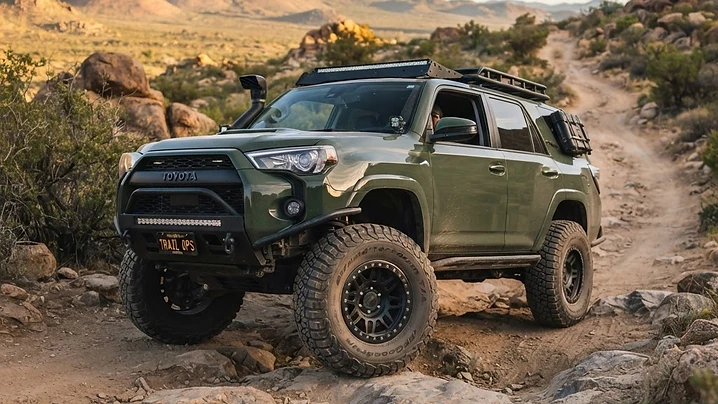
The fastest off-road capability upgrade you can make doesn't cost a dime — it's letting air out of your tires. Here's how low to go, when you need beadlocks, and how to get back to street pressure.
Shop off-road parts
Browse off-road gear
Air Down for the Trail: Tire Pressure, Beadlocks, and Getting Back on the Pavement
The fastest, cheapest capability upgrade you can make off-road doesn't cost a dime — it's letting air out of your tires. Dropping tire pressure is what turns a sketchy rock garden into a casual drive, and most owners never do it because they don't know how low to go or how to get back up to pressure.
Why Airing Down Works
At street pressure (35–40 psi), your tire is a rigid donut — it bounces off rocks, sinks into sand, and has a tiny contact patch that breaks loose the moment you ask for grip.
Drop the pressure and the tire becomes a balloon. It flexes, molds around rocks, lengthens the contact patch, and floats over soft ground instead of digging in. The same truck that struggled at 40 psi will crawl the same obstacle at 18 psi like it's not there.
How Low to Go
- 18–22 psi — Gravel, forest roads, light trail work. Stock bead-seat, no risk.
- 12–15 psi — Rocks, hard trails. Big contact patch, real grip. Still safe on a standard wheel.
- 8–10 psi — Deep sand, snow, mud. Maximum footprint — but this is beadlock territory. A standard wheel will pop the bead at these pressures under hard cornering.
Beadlocks and When You Need Them
A beadlock clamps the tire bead to the wheel with a bolted ring. It lets you run single-digit pressures without the tire unseating. On a standard wheel, going much below 12 psi risks the bead popping off — especially under side load in a turn.
For most trail rigs, 12–15 psi is the sweet spot and standard wheels are fine. Beadlocks are for dedicated rock crawlers and sand rigs that need to go lower.
Getting Back to the Pavement
Low pressure off-road is great; low pressure on the road is dangerous. A soft tire overheats at speed, rolls on the wheel, and blows out. The moment you hit pavement you need to air back up.
The recovery kit every wheeler needs:
- Airing-down tool or just a gauge with a bleed valve.
- An air source — a 12V compressor, CO2 tank, or on-board air system. Without this you're stuck low.
- A good dual-action gauge that reads 0–60 psi.
- A tire-plug kit for the inevitable puncture.
The Honest Workflow
- Air down at the trailhead — 15 psi is a safe starting point for most terrain.
- Run the trail. Adjust down if you're spinning; up if the tire is rolling on the wheel.
- Air back up at the end. Every time. Don't drive home on 15 psi.
Airing down is the single highest-capability-per-dollar move in off-roading. The compressor to air back up is the second-cheapest insurance you'll buy.
Find wheels for your car
Pick your make and model — we'll show you every wheel that fits your bolt pattern.
Get notified when new wheels are listed
New listings drop daily. Be the first to know when wheels for your car hit the marketplace. No spam, unsubscribe anytime.