The Grain Structure Guide: Why Your Wheel’s Molecular DNA Matters
Most buyers focus on weight, but the way aluminum molecules are arranged determines if a wheel bends or shatters. Here is how to choose the right manufacturing tech for your drive.
The Invisible Difference: Molecular Alignment
When browsing the RimRevival marketplace, it is easy to get distracted by finishes and spoke patterns. However, the most critical factor in a wheel’s performance isn't its shape—it is its grain structure. In materials science, the way aluminum molecules are arranged during manufacturing dictates how the wheel handles stress, heat, and impact. Understanding this "molecular DNA" is the only way to ensure you aren't overpaying for tech you don't need or under-speccing a wheel that might fail on the track.
Cast Wheels: The Porosity Problem
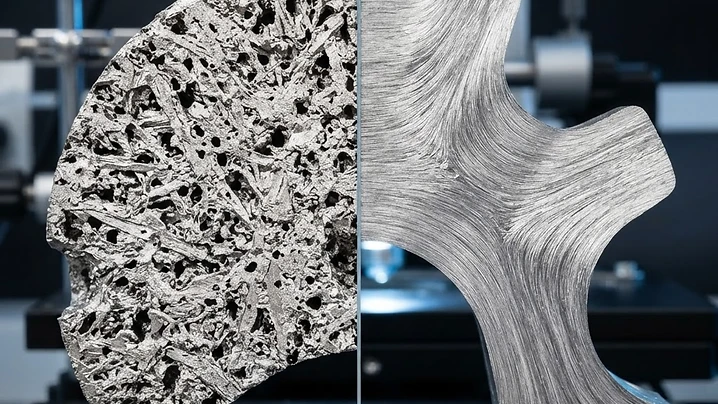
Cast wheels are created by pouring molten aluminum into a mold. As the metal cools, the molecules settle into a random, disorganized pattern. This process often leads to porosity—tiny microscopic air pockets trapped within the metal.
- The Risk: Because the grain is non-directional, cast wheels are brittle. Under extreme stress, such as a deep pothole, they are prone to cracking or shattering rather than bending.
- The Use Case: Perfect for daily drivers, show cars, and budget-conscious builds where extreme lateral G-forces aren't a factor.
Flow Forming: The Performance Sweet Spot
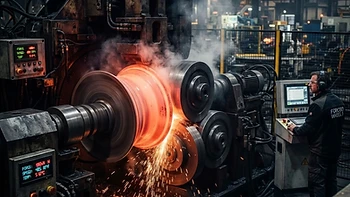
Flow forming (also called rotary forging) starts with a cast "pre-form" that is placed on a machine and spun while hydraulic rollers apply intense pressure to the barrel. This heat and pressure literally stretch the aluminum, compressing the molecules into a dense, linear grain structure similar to a forged wheel.
- The Benefit: You get a barrel that is significantly stronger and thinner than a standard cast wheel. This reduces "unsprung mass," which improves your suspension's ability to react to the road.
- The Use Case: The ideal choice for spirited street driving and occasional track days. It offers roughly 80% of the strength of a forged wheel at a fraction of the cost.
Forged Wheels: The Ultimate Grain Flow
Fully forged wheels are never liquid. They begin as a solid billet of 6061 aluminum that is crushed into shape using thousands of tons of pressure. This forces the grain of the metal to flow continuously into the shape of the wheel.
- The Advantage: There is zero porosity. The continuous grain flow means the wheel can be engineered with much thinner spokes while maintaining a higher load rating. If a forged wheel fails, it typically bends rather than snapping, often allowing the driver to maintain control.
- The Use Case: Dedicated track cars, heavy high-performance SUVs, and builds where every ounce of weight savings is critical.
Buyer’s Decision Matrix
Before you click "buy," use this quick checklist to match the tech to your needs:
- Check the Load Rating: Always ensure the wheel's rated capacity exceeds 50% of your vehicle's heaviest axle weight, regardless of manufacturing method.
- Identify Your Failure Mode: If you live in a city with notorious potholes, flow-formed or forged barrels provide a safety margin that cast wheels cannot.
- Weight vs. Strength: Don't buy forged just for weight; some high-quality cast wheels (like the Enkei RPF1) are lighter than entry-level forged options. Buy forging for the structural integrity.
Find wheels for your car
Pick your make and model — we'll show you every wheel that fits your bolt pattern.
Get notified when new wheels are listed
New listings drop daily. Be the first to know when wheels for your car hit the marketplace. No spam, unsubscribe anytime.