The Elongation Factor: Why You Want a Wheel That Bends, Not Breaks
Beyond weight and style, elongation determines how your wheel reacts to a sudden impact. Discover why a ductile wheel is your best insurance policy on the road.
The Hidden Metric of Wheel Safety
When enthusiasts shop for wheels, they usually obsess over two things: aesthetic and weight. While shedding unsprung mass is vital for performance, there is a third, more critical metric often buried in technical data sheets: elongation.
Elongation refers to the amount a metal can stretch or flex before it reaches its breaking point. In the context of wheel manufacturing, this property determines whether your wheel will safely bend when you hit a massive pothole or catastrophically shatter. Understanding the relationship between manufacturing methods and material ductility is the best way to protect both your investment and your safety.
The Science of Grain Structure
The difference in elongation comes down to the molecular level. In a standard cast wheel, molten aluminum is poured into a mold. As it cools, the grain structure forms randomly, creating a porous and relatively brittle internal matrix. According to Forged vs. Cast Wheels: Understanding the Differences, these wheels lack the density and strength of their forged counterparts.
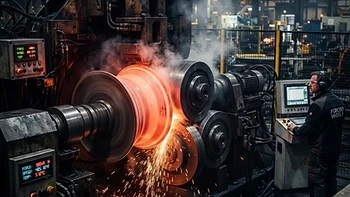
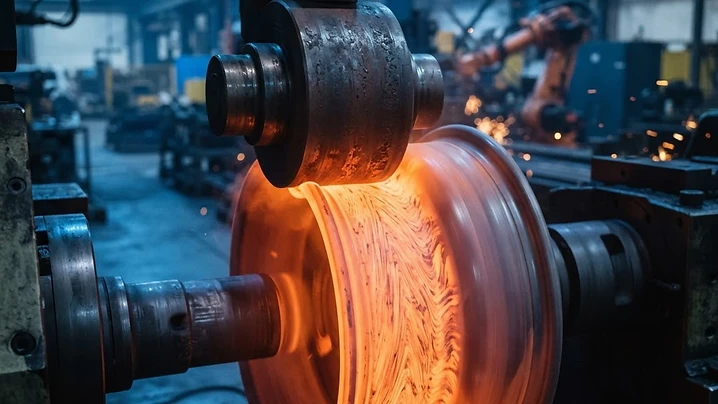
Conversely, flow forming and forging use mechanical pressure to manipulate the metal. Flow forming involves spinning a cast "preform" while rollers apply intense pressure to the barrel. This process stretches and compresses the aluminum, aligning the grain structure lengthwise. This alignment, also known as "grain flow," significantly increases tensile strength and shock resistance.
Why Bending is a Feature, Not a Bug
A high elongation rating means the wheel is "ductile." If you hit a curb or a deep road hazard at high speed, a ductile wheel—typically a fully forged or high-quality flow-formed rim—is designed to deform.
As noted by Speed Academy, increased elongation allows a wheel to flex before arriving at a breaking point. This is a critical safety feature: a bent wheel might cause a vibration or a slow air leak, allowing you to pull over safely. A brittle cast wheel with low elongation is more likely to crack or lose a chunk of the rim instantly, leading to immediate tire deflation and loss of vehicle control.
Buyer’s Checklist: How to Spot Quality
When browsing the RimRevival marketplace, use these criteria to ensure you are buying a wheel with superior material properties:
- Check the Alloy: Look for 6061-T6 aluminum in forged wheels. The T6 tempering process is specifically designed to optimize the balance between hardness and ductility.
- Verify Certifications: Ensure the wheels carry JWL (Japan Light Alloy Wheel) or VIA stamps. These indicate the design has passed rigorous impact and radial fatigue tests.
- Look for "Flow Formed" Barrels: If fully forged wheels are out of your budget, prioritize flow-formed options. These provide forged-like elongation properties in the barrel—the area most susceptible to pothole damage—at a lower price point.
- Ask for Load Ratings: A higher load rating often indicates a denser, more robust manufacturing process that can handle higher stress without reaching the material's yield point.
Find wheels for your car
Pick your make and model — we'll show you every wheel that fits your bolt pattern.
Get notified when new wheels are listed
New listings drop daily. Be the first to know when wheels for your car hit the marketplace. No spam, unsubscribe anytime.