The Art of the Trim Ring: Restoring and Sourcing Vintage Wheel Jewelry

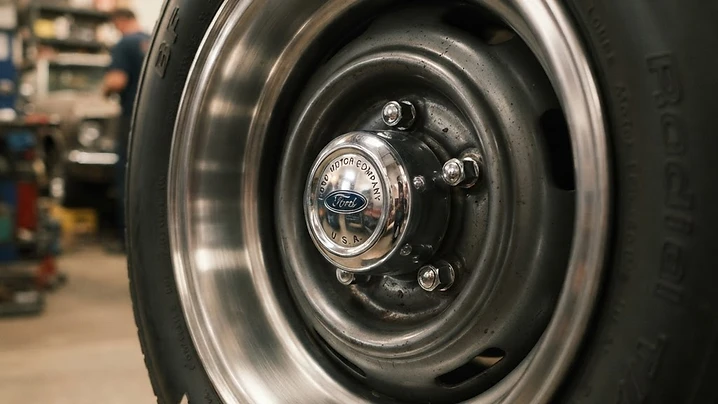
Learn how to identify, source, and restore the stainless steel trim rings that provide the essential finishing touch for classic rally and steel wheels.
The Anatomy of a Classic Trim Ring
While the wheel provides the structure, the trim ring provides the soul. Often called "beauty rings," these components were standard on iconic wheels like the Chevy Rally, Ford Styled Steel, and Mopar Road Wheels. They serve a dual purpose: hiding the utilitarian weights and welds of a steel wheel while adding a premium, wide-rim look. Identifying the correct ring requires measuring two factors: depth and profile. A "stepped" profile features distinct ridges, common on 1960s muscle cars, while "smooth" profiles offer a cleaner, streamlined look popular in the early 1970s. Deep-dish rings are essential for 8-inch wide wheels to prevent an unsightly gap between the ring and the center cap.
Sourcing: The OEM vs. Reproduction Dilemma
When shopping on marketplaces like RimRevival, you will encounter two main categories: New Old Stock (NOS) and modern reproductions.
- NOS/Originals: Usually made of heavy-gauge stainless steel. They offer the correct "sheen" but often suffer from "curb rash" or dings from decades of use.
- Reproductions: Often made of thinner steel or even chrome-plated plastic. While cheaper, they may use different tension clips that can scratch your fresh wheel paint if not seated perfectly. Always verify the attachment style. Four-clip rings are easier to install but can rotate during spirited driving; full-circumference "serrated" clips offer the best grip but are significantly more difficult to remove without specialized tools.
DIY Restoration: Bringing Back the Shine
If you find a set of original stainless rings with minor damage, restoration is often a better investment than buying low-quality replacements. Unlike chrome, stainless steel is the same material all the way through, meaning it can be sanded and buffed repeatedly.
- Denting: Use a plastic hammer and a wooden dolly to gently tap out small dings from the backside. Work slowly to avoid stretching the metal.
- Sanding: For curb rash, start with 400-grit wet sandpaper and work up to 2000-grit until the scratches disappear and the surface feels like glass.
- Buffing: Use a bench grinder with a felt wheel and stainless steel polishing compound. Move the ring constantly to avoid heat discoloration.
Buyer’s Checklist for Trim Rings
- Measure the inner diameter: Ensure the ring clears your specific center cap or hubcap.
- Check the valve stem hole: Some rings have oval holes for rubber stems, while others have round holes for metal stems. Matching this is critical for a flush fit.
- Verify material: Use a magnet; high-quality stainless steel is generally non-magnetic or only slightly magnetic, whereas cheap chrome-plated steel will be strongly magnetic and prone to rust.