Vintage Wheel Finishes: Matching Period-Correct Paints
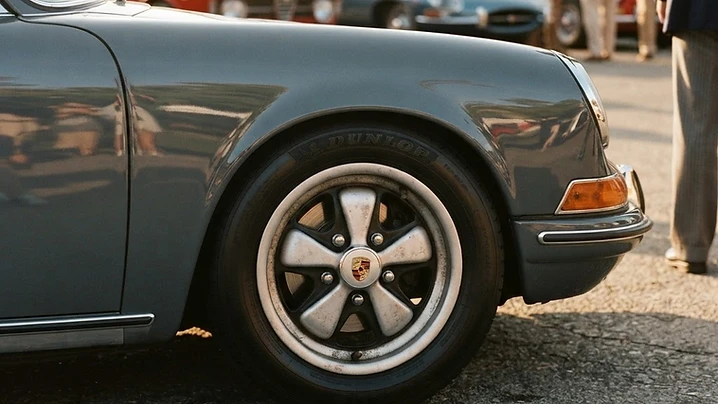
A concours-quality restoration requires the right finish, not just the right wheel. Here is how to match paint type, sheen, and color codes to each era.
Shop vintage
Browse vintage OEM wheels
Vintage Wheel Finishes: Matching Period-Correct Paints
A concours-quality restoration requires more than the right wheel — it requires the right finish. The paint and plating processes used on vintage wheels were different from modern methods, and matching them is what separates a correct restoration from a nice-looking one.
The Finishes of Each Era
1920s-1930s: Painted and Striped
Early wheels were painted with lacquer-based paints. The colors were often body-matched or a contrasting accent — cream, gray, or red on dark bodies. Fine pinstripes were hand-applied around the rim or between spokes.
1940s-1950s: Satin and Semi-Gloss
Post-war wheels moved toward satin and semi-gloss finishes — less reflective than modern gloss, with a softer sheen. The paint was enamel-based, and the texture was slightly orange-peel from the spraying technique of the era.
1960s-1970s: High-Gloss and Mag-Style
The muscle car era brought high-gloss enamel and the mag-look — satin aluminum with painted accents. Silver, gray, and body-color wheels were common, and the finish was glossy but not the mirror of modern clearcoat.
1970s-1980s: Clearcoated Alloy
As alloy wheels proliferated, clearcoated finishes became standard. The aluminum was polished or satin-finished and then clearcoated for protection. These clearcoats yellow with age — a tell-tale sign of original vintage alloy.
How to Match a Period Finish
Identify the Era
Determine the year and model of the car. Factory documentation, original sales brochures, and concours judging guides specify the original wheel finish.
Find the Original Color
Wheel colors were often standard paint codes from the car's manufacturer. A 1965 Mustang's wheel color matches a specific Ford paint code. Match that code — do not eyeball it.
Choose the Right Sheen
Modern paints are typically higher-gloss than vintage finishes. To match a vintage look:
- 1920s-1950s: Satin or semi-gloss (30-50 gloss units)
- 1960s-1970s: Semi-gloss to gloss (50-70 gloss units)
- 1980s+: Gloss (80+ gloss units)
A gloss meter ($20-30) can measure the sheen. Match the reading to the era.
The Orange-Peel Factor
Vintage paint had subtle orange-peel texture from the spray equipment of the era. Modern paints sprayed with HVLP guns are smoother. To match vintage, use a slightly coolder spray technique or add a texturing additive. It is a subtle difference — but concours judges notice.
Powder Coat vs Paint
Paint
- Authentic — matches the era's finish
- Repairable — chips can be touched up
- Less durable — susceptible to stone chips and fuel spills
- More expensive — custom mixing and application
Powder Coat
- Durable — far more chip and chemical resistant
- Uniform — smooth, even finish
- Less authentic — too uniform and too glossy for pre-1970s wheels
- Not repairable — the whole wheel must be re-coated to fix a chip
For a driver-quality restoration, powder coat is the practical choice. For concours, paint is the correct choice.
The Clearcoat Question
Modern restorations often apply a clearcoat over paint for durability. Vintage wheels did not have clearcoat — the paint was the finish. If the judging standard requires no clearcoat, skipping it is the correct choice. For a driver, a clearcoat protects the paint from fuel and brake fluid.
The Takeaway
A correct vintage wheel restoration is about more than the wheel — it is about the finish. Match the era's paint type, sheen, and color code. For a driver, prioritize durability with powder coat. For concours, prioritize authenticity with period-correct paint. Either way, never guess the color — match the code.
Find wheels for your car
Pick your make and model — we'll show you every wheel that fits your bolt pattern.
Get notified when new wheels are listed
New listings drop daily. Be the first to know when wheels for your car hit the marketplace. No spam, unsubscribe anytime.
